The Hidden Costs of Reactive Maintenance in Mining
Reactive maintenance costs far more than repairs. It increases downtime exposure, inflates logistics and labor, accelerates rebuild cycles, raises safety risk, and destabilizes throughput.
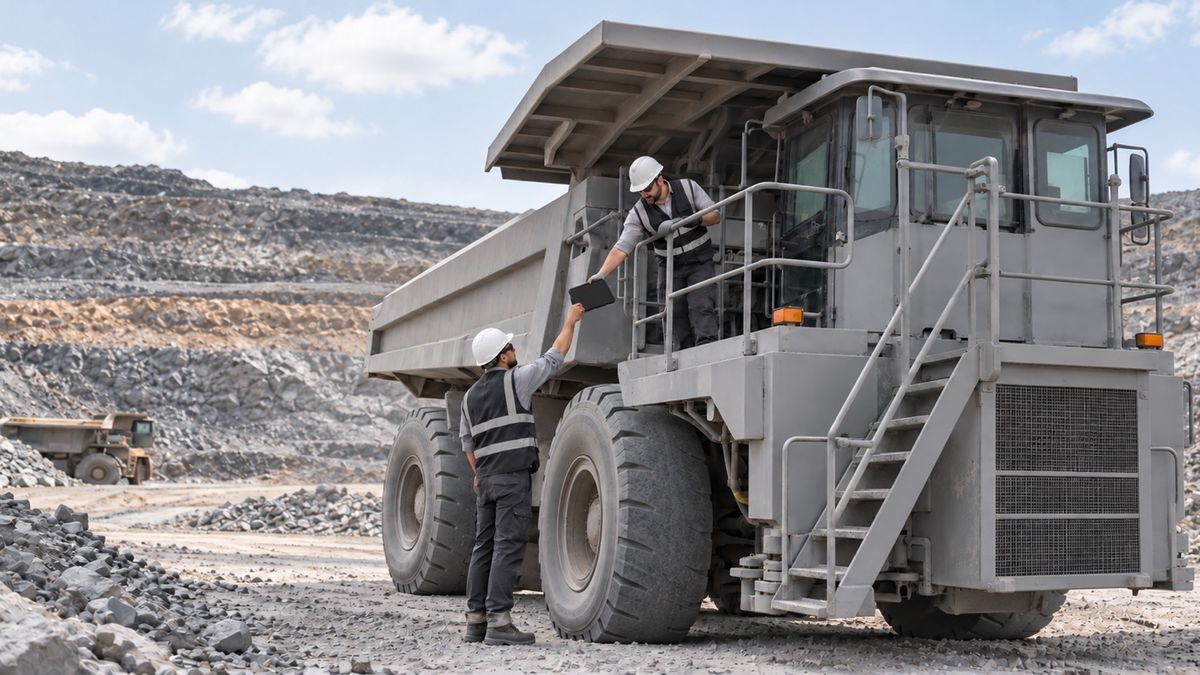
Mining is entering a phase where profitability is no longer protected by higher output alone. Declining ore grades, deeper deposits, and more complex logistics have made operational reliability the primary determinant of sustainable performance.
In this environment, reactive maintenance becomes a strategic vulnerability.
It appears cost-efficient because it avoids upfront investment and planning. In reality, it introduces hidden financial, operational, and organizational costs that compound across production, capital life, safety exposure, and workforce stability.
Productivity Pressure Makes Reliability Non-Negotiable
Over the past two decades, mining productivity has struggled to keep pace with other industries.
McKinsey notes that the ten largest mining companies experienced marginal productivity growth compared to manufacturing and business services.
Industry reporting highlights that while manufacturing productivity increased significantly from the late 1990s through 2023, mining productivity declined due to deeper deposits and operational complexity. Source: Global Mining Review
When structural headwinds intensify, uptime becomes the daily competitive advantage.
What Reactive Maintenance Actually Means
Reactive maintenance refers to intervention after failure or near-failure conditions.
It commonly appears as:
- Emergency repairs
- Breakdown response
- Run-to-failure strategies
- Urgent corrective fixes
It persists because it feels efficient. No sensor infrastructure. No predictive systems. No planning overhead.
That logic may work for non-critical assets.
It fails completely when applied to production bottlenecks such as haul fleets, crushers, conveyors, mills, and high-critical pumps.
The Hidden Cost Is Downtime Instability
Unplanned downtime in heavy industry is often cited in ranges that can reach up to $500,000 per hour depending on scale and criticality.Source: Abb
In mining, downtime rarely remains isolated.
One equipment failure can trigger:
- Haul truck queuing and idle burn
- Shovel under-utilization
- Crusher feed disruption
- Processing instability
- Missed shift targets
Reactive maintenance does not just create stoppages. It destabilizes production flow.

Hidden Cost 1: Labor Premium and Emergency Execution
Reactive maintenance pushes work into the most expensive window.
Night repairs, weekend callouts, overtime premiums, and rushed deployment inflate labor cost per intervention. Skilled technicians spend more time mobilizing than optimizing.
The repair may succeed. The cost structure inflates regardless.
Hidden Cost 2: Expedited Logistics and Parts Markups
Emergency repairs force emergency procurement.
That typically means:
- Rush freight
- Reduced vendor leverage
- Higher contractor dependence
- Excess contingency inventory
The organization pays for urgency instead of certainty.
Hidden Cost 3: Accelerated Asset Degradation
Minor faults escalate when ignored.
By the time failure becomes visible, adjacent components are often already stressed. That accelerates rebuild cycles and increases lifecycle cost.
McKinsey reports predictive maintenance can reduce machine downtime by 30 to 50 percent and increase machine life by 20 to 40 percent in industrial contexts.
Deloitte further explains how predictive maintenance improves uptime and reduces unplanned intervention through connected analytics.
In mining, those improvements directly translate into capital preservation and throughput stability.
Hidden Cost 4: Energy Inefficiency Before Failure
Equipment rarely fails instantly.
Before breakdown, friction increases, efficiency drops, and energy consumption rises. The site absorbs weeks of hidden energy waste before paying for repair.
Reactive maintenance delays intervention until inefficiency becomes failure.
Hidden Cost 5: Compliance and Shutdown Exposure
Neglected equipment can become regulatory exposure.
MSHA outlines enforcement expectations and civil penalties tied to violations and reporting obligations.The fine is rarely the largest cost.
Withdrawal orders, shutdown exposure, and reputational damage can create far larger operational consequences.
Hidden Cost 6: Workforce Burnout and Talent Risk
A reactive environment creates constant crisis behavior.
That leads to:
- Cognitive overload
- Short-term fixes
- Increased stress
- Higher turnover
Mining already faces skilled labor constraints. A crisis-driven maintenance culture makes retention harder.
From Maintenance Cost Center to Operational Stabilizer
Predictive maintenance is not simply about sensors.
It changes decision timing.
Instead of reacting to breakdown, operations intervene before instability propagates into throughput disruption.
The true value emerges when maintenance signals connect directly to operational decisions. That is the foundation of Real-Time Operational Intelligence in Mining, where asset health, dispatch coordination, and production planning operate as one system rather than isolated functions.
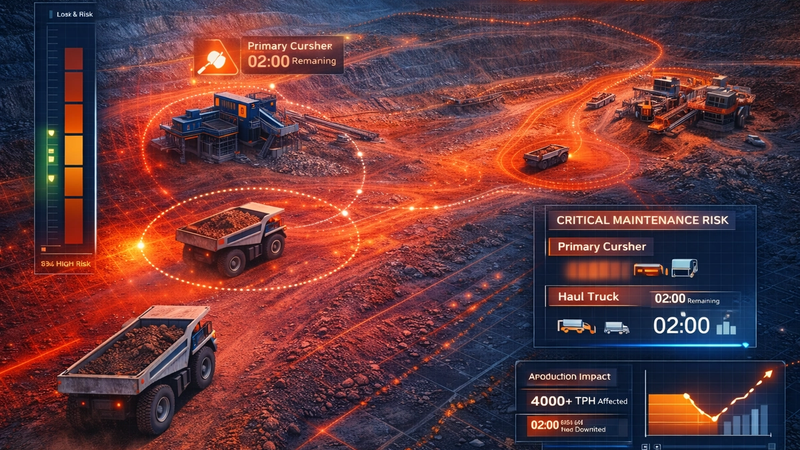
Modern mining operations require more than maintenance alerts.
They require a decision layer that translates early signals into action across fleet routing, workforce coordination, and processing flow.
This is where AIM by HonestDig functions as the operational intelligence layer, identifying failure probability before it becomes downtime and aligning maintenance decisions with production stability.
When reliability begins affecting throughput targets, solutions such as Guaranteed Production Throughput and Predictive Site Resilience become essential to prevent small anomalies from turning into systemic disruption.
Reactive maintenance feels familiar.
But familiarity is not a strategy.
Every unplanned failure introduces volatility across cost, capital life, safety exposure, and throughput stability. Over time, that volatility becomes structural.
Mining leaders do not need more reporting. They need faster decision loops that prevent escalation before it spreads.
If your operation is evaluating how to reduce unplanned downtime and stabilize asset reliability, assess where reactive maintenance is creating hidden cost. Schedule a conversation with the HonestDig team to explore how an intelligence-driven approach can convert maintenance from a reactive burden into a measurable performance advantage.
Frequently Asked Questions
1. Why is reactive maintenance risky in mining?
Because mining assets are interconnected. One unexpected failure can disrupt haul cycles, plant feed, safety exposure, and daily production targets, creating costs far beyond the repair itself.
2. Why is reactive maintenance expensive?
It drives unplanned downtime, overtime labor, expedited parts, and production instability. The indirect costs usually exceed the repair cost.
3. How does reactive maintenance affect throughput?
Unexpected failures create bottlenecks, idle fleet time, and unstable crusher feed, reducing effective daily output.
4. What is the advantage of predictive maintenance?
It detects early warning signals and enables intervention before failure, improving uptime and extending asset life.
5. How can mining operations reduce reactive maintenance?
By integrating equipment health data with real-time operational intelligence so issues are addressed before they escalate into downtime events.