Modular Mining DISPATCH Alternative in 2026
Compare Modular Mining DISPATCH alternatives in 2026. Evaluate AI, interoperability, electrification, and ROI to choose the right mining system.
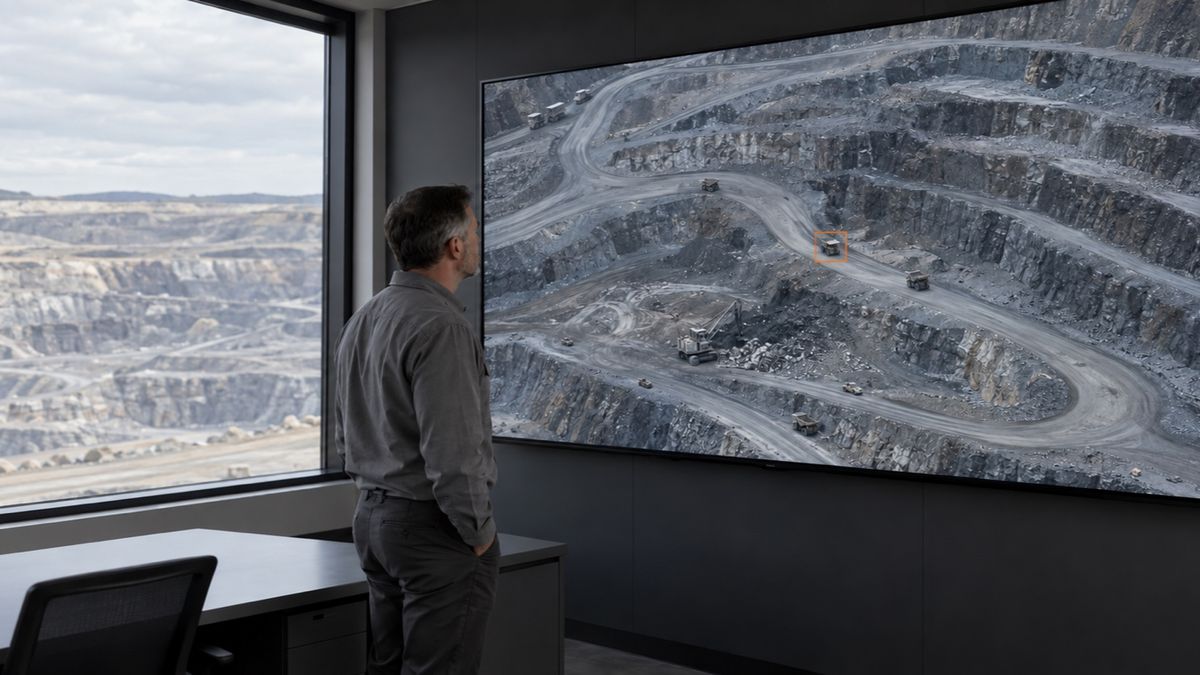
Why This Decision Is No Longer About Dispatch
Choosing a Modular Mining DISPATCH alternative is no longer about dispatch performance.
It is about controlling the entire operation.
DISPATCH still sets the benchmark for haulage optimization. It is reliable, proven, and delivers consistent productivity gains.
But mining operations today are not defined by stability.They are defined by variability, integration, and real-time constraints.
This changes what “best” means.
The right system is no longer the one that optimizes trucks the best.It is the one that connects the operation, adapts in real time, and improves decisions while work is happening.
What Changed in Mining Systems Between 2023 and 2026
Mining FMS comparison has fundamentally shifted.
Not because dispatch stopped working.But because operations became more complex.
Three changes define this shift.
Interoperability is now a requirement.Standards like ISO 23725 allow fleets, autonomy systems, and platforms to work together. This removes vendor lock-in and enables flexibility.
Fleet systems are now managing energy.Electrification introduces battery states, charging queues, and energy optimization into daily operations.
ROI is evaluated across the system.Throughput, fuel, downtime, and maintenance are no longer separate metrics. They are evaluated together.
These are not isolated requirements.
They all point to one thing.
Operations must be managed as a connected system.
Where DISPATCH Still Delivers Strong Performance
Any serious evaluation must acknowledge this.
DISPATCH continues to deliver measurable productivity improvements.Its dispatch logic is refined, stable, and proven at scale.
It performs best in:
Structured environmentsHigh-volume operationsPredictable workflows
For these conditions, it remains highly effective.
But performance alone is no longer enough.
When operations become dynamic, the limitation appears.
Dispatch can optimize movement.It cannot coordinate the entire system.
Wenco vs Modular Mining: Open Interoperability vs Optimization Depth
The Wenco vs Modular Mining comparison is fundamentally about system architecture rather than features.
Some platforms prioritize interoperability and are designed to integrate across OEMs, autonomy systems, and external tools. This provides flexibility and reduces long-term dependency on a single ecosystem.
Others focus on deep optimization within structured environments. They deliver strong results where operations are stable and predictable.
This creates a clear trade-off. As operations evolve toward autonomy and mixed fleets, interoperability becomes increasingly important. Without it, systems struggle to adapt to changing operational demands.
Hexagon vs Modular Mining: System-Level Integration vs Dispatch Strength
The Hexagon vs Modular Mining comparison introduces another important distinction. Some platforms treat fleet management as part of a connected ecosystem rather than a standalone function.
They integrate safety systems, planning tools, operator data, and real-time execution inputs. This allows decisions to consider multiple factors simultaneously, such as safety conditions, production targets, and operational constraints.
DISPATCH remains strong as a specialized dispatch engine. However, modern systems extend value by connecting decisions across the operation, not just optimizing haulage.
AI, Explainability, and the Shift to Predictive Dispatch
AI is often positioned as the key differentiator in mining systems, but the real difference lies in decision timing and context.
Traditional systems optimize based on current conditions. Modern systems predict and act before bottlenecks occur. However, prediction alone is not enough. Decisions must consider the full system, including equipment status, queues, constraints, and energy conditions.
This is where AIM improves execution. It coordinates decisions across the operation in real time rather than optimizing isolated variables. Equally important, these decisions must be explainable. If operators cannot understand or trust system behavior, adoption becomes difficult regardless of performance gains.
Electrification Is Forcing System-Level Coordination
Electrification is changing how fleet systems are evaluated. It introduces operational challenges that cannot be managed through dispatch alone.
Systems must now manage battery levels, charging schedules, and queue optimization at charging stations. These factors directly influence production flow and equipment availability.
Charging delays impact dispatch decisions. Dispatch decisions impact throughput. Throughput impacts revenue. Because of this interdependence, electrification reinforces the need for a connected operational system.
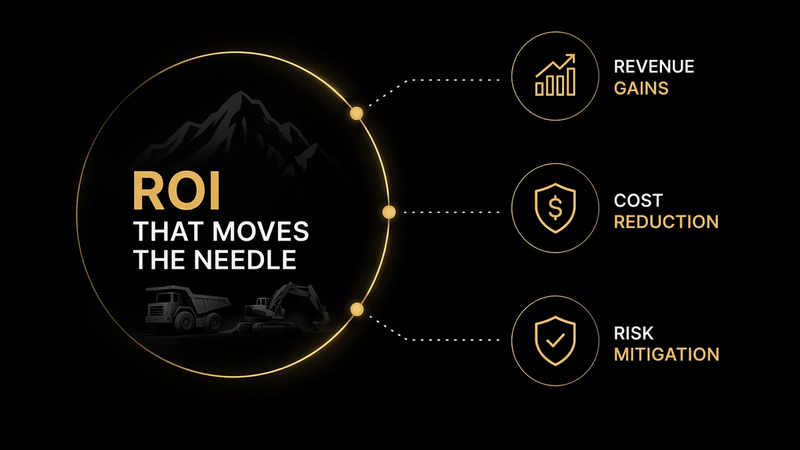
ROI Does Not Come From One Module
One of the most common mistakes in evaluating mining systems is treating ROI as a module-level outcome.
Fuel savings, downtime reduction, and productivity improvements are often assessed independently. In reality, these factors are interconnected.
Reducing downtime improves equipment availability. Higher availability increases throughput. Increased throughput drives revenue. At the same time, fuel optimization and maintenance improvements reduce operating costs.
These effects compound rather than operate separately. This is why system-level control produces significantly higher ROI than isolated improvements.
To evaluate where these gains exist, operations can assess performance throughGuaranteed Production Throughput and Predictive Site Resilience.
What Actually Matters in a Modular Mining DISPATCH Alternative
The evaluation is no longer about feature comparison. It is about whether the system can manage the operation as a whole.
A strong alternative must be able to integrate across fleets and systems, coordinate decisions in real time, manage operational constraints including energy, and clearly link performance to financial outcomes.
Scalability is also critical. The system must adapt as operations evolve, rather than requiring replacement when complexity increases.
The Real Decision You Are Making
The question is no longer which dispatch system performs better. The question is which system can manage the operation as a whole.
If systems remain disconnected, inefficiencies repeat. If decisions are delayed, value is lost. Consistent performance improvement requires real-time coordination across the entire operation.
That is exactly what AIM is built for.
How to Choose the Right Modular Mining DISPATCH Alternative
The best Modular Mining DISPATCH alternative is not universal.
It depends on where the operation is heading.
Choose a system focused on interoperability and integration if:
- You are moving toward autonomy
- You operate mixed fleets
- You need multi-site coordination
Choose a system focused on optimization depth if:
- Your operations are stable
- Your fleet is standardized
- Your goal is maximum output from current systems
This is the decision that matters.Choosing the right system is only half the equation. Knowing whether it’s actually delivering results is what matters. Contact us to assess your current operations and identify where real efficiency gains exist.
Frequently Asked Questions
1. What is the best Modular Mining DISPATCH alternative in 2026?
The best alternative depends on operational goals. Systems focused on interoperability and AI-driven optimization are better suited for evolving operations, while optimization-focused systems perform well in stable environments.
2. What is ISO 23725 and why does it matter?
ISO 23725 is a global standard that enables fleet management systems to integrate with autonomous haulage systems across different OEMs. It reduces vendor lock-in and improves long-term flexibility.
3. How does electrification impact fleet management systems?
Electrification requires fleet systems to manage battery levels, charging schedules, and energy optimization. This adds a new layer of complexity beyond traditional dispatch.
4. How does AI improve mining fleet management systems?
AI enables predictive decision-making, reduces bottlenecks, and improves throughput. However, explainability is critical to ensure trust and operational adoption.
5. What should be the top priority in a mining FMS comparison?
The top priority should be long-term adaptability. The system must support evolving operations, integrate with future technologies, and deliver measurable ROI.