Reduce Haul Truck Idle Time in Open-Pit Mines
Reduce haul truck idle time by 10–20% using better dispatch, queue control, and real-time visibility systems.
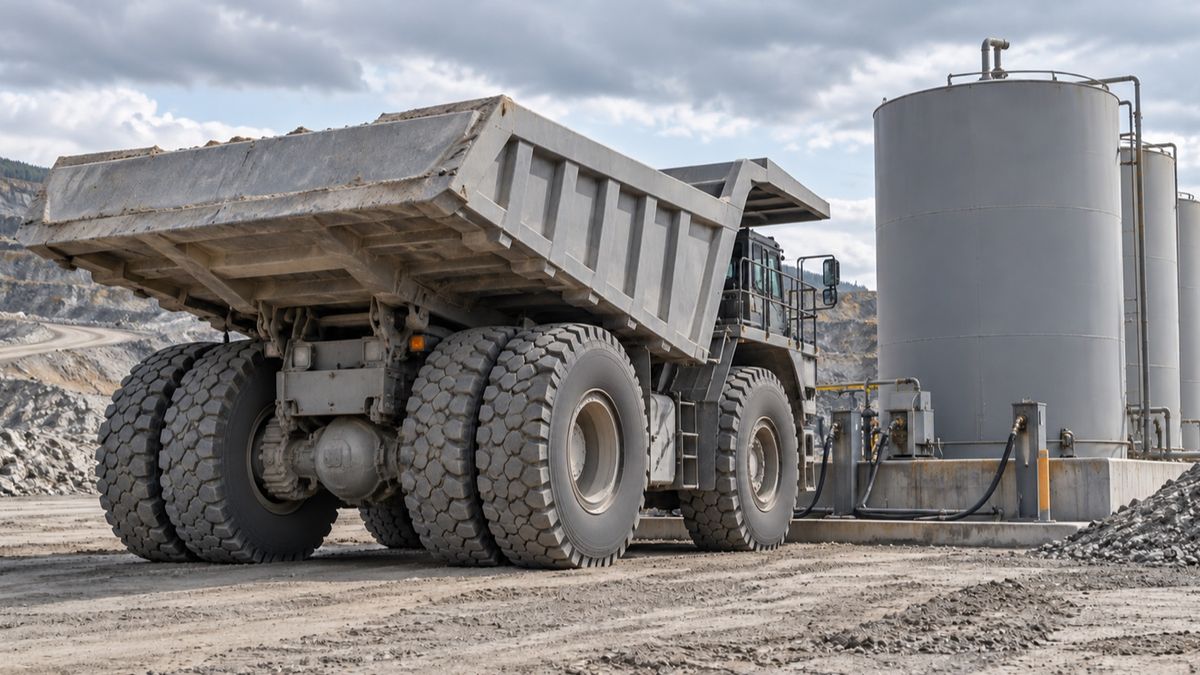
How to Reduce Haul Truck Idle Time in Open-Pit Mines
Most mines do not know how much idle time is actually costing them.
Across a full shift, small delays, short queues, and idle pockets accumulate into hours of lost productivity. In many operations, this translates into a 10–20% loss in effective fleet output.
The instinct is to add more trucks.
But that usually makes things worse by increasing congestion and fuel burn.
The real problem is not capacity. It is coordination across the system.
This is exactly where AIM changes how operations are managed by connecting dispatch, equipment, and real-time conditions into a single control layer.
Idle Time Is Not Just Waiting. It Is Hidden Loss
Idle time is often treated as harmless waiting.
It is not.
A haul truck continues to burn fuel even when stationary. Over time, this creates a direct cost impact. Engine wear increases due to prolonged idling, leading to shorter maintenance cycles and reduced asset life.
Across a fleet, this becomes a significant operational loss.
Idle time is not passive.It actively reduces productivity, increases fuel burn, and accelerates equipment wear.
Why Most Mines Struggle to Reduce Haul Truck Idle Time
Most operations measure movement, not inefficiency.
Cycle times, tonnage, and fuel are tracked. Idle time is not broken down into clear causes.
This creates a visibility gap.
Idle time exists, but it is not understood.
Without knowing whether delays come from queues, dispatch, maintenance, or behavior, teams cannot act with precision.
AIM addresses this by linking idle time directly to its operational cause and enabling teams to act within the same cycle instead of after the loss has already occurred.
Where Idle Time Actually Builds Up
Idle time does not sit in one stage of the haul cycle.
It builds between stages.
Trucks wait before loading, slow down near congestion, and stack at dumping points. These delays may appear small individually, but across the fleet they become a major source of lost productivity.
Even a slight imbalance in one part of the system creates ripple effects across the entire operation.
Trucks do not wait because of operators.They wait because the system is out of sync.
Queues Are the Largest and Most Fixable Driver
In most open-pit operations, a significant portion of idle time is concentrated in queues. Trucks spend a large part of their shift waiting at loading points, lining up at dump zones, or slowing down as congestion builds around high-traffic areas.
This issue often goes unnoticed because each delay feels small in isolation, but across an entire fleet, these queues become the biggest source of lost productivity.
Adding more trucks does not solve this problem. It typically increases queue length and pushes idle time further into the cycle rather than eliminating it.
The real solution lies in controlling flow. When truck arrival rates are aligned with loader and dump capacity, movement becomes smoother, queues shrink, and cycle efficiency improves. Even small adjustments in this balance can lead to a noticeable increase in throughput without any additional equipment.
Dispatch Is the Control Layer of the Entire System
Dispatch determines how trucks move across the operation.
In many mines, dispatch is still based on static rules. This creates imbalance.
Some loaders are overloaded.Others remain underutilized.Trucks arrive too early or too late.
The difference is not automation.It is real-time coordination.
A system that understands trucks, loaders, queues, and constraints together can make decisions during the cycle, not after it.
This is where improve production throughput becomes directly linked to idle time reduction, because flow efficiency defines both.
Predicting Delays Instead of Reacting to Them
Most operations respond only after congestion has already formed. By that time, trucks are waiting, queues have built up, and productivity has already been lost. This reactive approach keeps the system in a cycle of catching up rather than staying ahead.
A more effective approach is to anticipate delays using real-time data and historical patterns. When early signs of congestion appear, trucks can be rerouted or reassigned immediately, preventing queues instead of managing them and keeping flow stable across the entire cycle.
Behavior and Engine-On Idle Also Add Up
Not all idle time is structural.
Some of it comes from operator behavior and lack of structured idle control.
Engines continue running during long waits. Trucks idle near service areas. Delays occur during shift transitions.
These are not isolated issues. They repeat every day.
With continuous monitoring and structured feedback, behavior becomes consistent across the fleet.
This is where systems that automate workforce governance ensure consistency across shifts, not just individual improvement.
Maintenance Delays Create Ripple Effects
A breakdown does not affect just one truck.
It disrupts flow across the entire operation.
When maintenance is reactive, delays spread quickly. Queues increase, trucks wait longer, and idle time rises across the system.
Predictive maintenance changes this.
By identifying issues early, operations prevent disruptions instead of reacting to them.
This is a key part of building predictive site resilience across the operation.
Road Conditions and Micro-Delays Matter More Than Expected
Idle time is not only about full stops.
It also includes slowdowns caused by poor road conditions.
Uneven surfaces, gradients, and inefficient intersections create small delays that accumulate over time.
Advanced operations use data such as:
- Strut pressure
- Frame stress signals
- Speed variation patterns
This helps identify specific road segments that need improvement, rather than relying on general maintenance.
Technology Is Changing How Idle Time Is Managed
New systems are shifting idle time management from observation to control.
Mining idle time dashboards now provide real-time visibility into where trucks are waiting and why.
Modern systems typically include:
- Real-time idle tracking by location
- Fuel monitoring and idle detection
- Dispatch optimization engines
- Automated alerts and controls
Autonomous haulage and auto stop-start systems are also reducing human-induced delays.
Before vs After Idle Time Optimization
Metric | Before Optimization | After Optimization |
|---|---|---|
Average Idle Time per Truck | 18–22% of shift | 10–12% of shift |
Loader Queue Time | High and inconsistent | Balanced and controlled |
Fuel Wastage | High due to engine-on idle | Reduced significantly |
Dispatch Efficiency | Static allocation | Dynamic and predictive |
Fleet Productivity | Limited by delays | Improved throughput |
This level of improvement is achievable without adding trucks, simply by improving coordination.
Balance Matters More Than Fleet Size
One of the most critical concepts in reducing idle time is match factor, which is the balance between the number of trucks and the capacity of loading equipment. When this balance is off, inefficiencies show up immediately across the system. Too many trucks lead to long queues, while too few reduce shovel utilization and overall output.
The goal is not to maximize truck usage but to maintain balanced system performance. When trucks and loaders are aligned, flow becomes stable, queues reduce, and idle time naturally drops without the need for additional equipment.
A Practical Approach to Reduce Haul Truck Idle Time
Reducing idle time requires a structured approach.
Start with visibility. Measure idle time clearly and break it down by location and cause.
Then focus on the biggest contributors:
- Queue reduction at loaders and dumps
- Better dispatch allocation
- Maintenance planning
- Idle control policies
Finally, monitor continuously using a mining idle time dashboard.
This ensures improvements are sustained over time.
What to Do Next
See exactly where idle time is building in your operation and how to eliminate it in real time.
Get a clear breakdown of your idle time, the root causes behind it, and the potential gains from improving coordination with HonestDig mining optimization platform.
Frequently Asked Questions
1. How to reduce haul truck idle time?
Focus on dispatch optimization, queue reduction, and real-time monitoring.
2. What causes idle time in mining fleets?
Queues, dispatch inefficiencies, maintenance delays, and traffic conditions.
3. What is a mining idle time dashboard?
A system that shows where and why trucks are idle in real time.
4. Can idle time be reduced without adding trucks?
Yes. Most improvements come from better coordination.
5. What is the biggest contributor to idle time?
Queues at loading and dumping points.