Reduce Unplanned Equipment Downtime in Mining
Learn how to reduce unplanned equipment downtime in mining using real formulas, MTBF benchmarks, and proven strategies to minimize losses and improve uptime.
The Real Cost of Unplanned Equipment Downtime in Mining (With Formulas)
It is lost tonnes, lost revenue, and disruption across the entire operation.
Most mines are still managing downtime as a maintenance problem.But it is actually an operational failure.
In a large operation, even a 1% improvement in uptime can translate to nearly 250,000 additional tonnes annually, which can mean over $15 million in recovered revenue depending on commodity pricing.
Downtime does not start at failure.It starts when the system loses visibility.
This is exactly where AIM changes how operations are managed by connecting equipment data, maintenance workflows, and real-time operational decisions into a single control layer.
What Unplanned Downtime Actually Costs
The visible cost of downtime is easy to measure.
Repair bills, spare parts, and maintenance labor are all tracked.
The real cost sits below the surface.
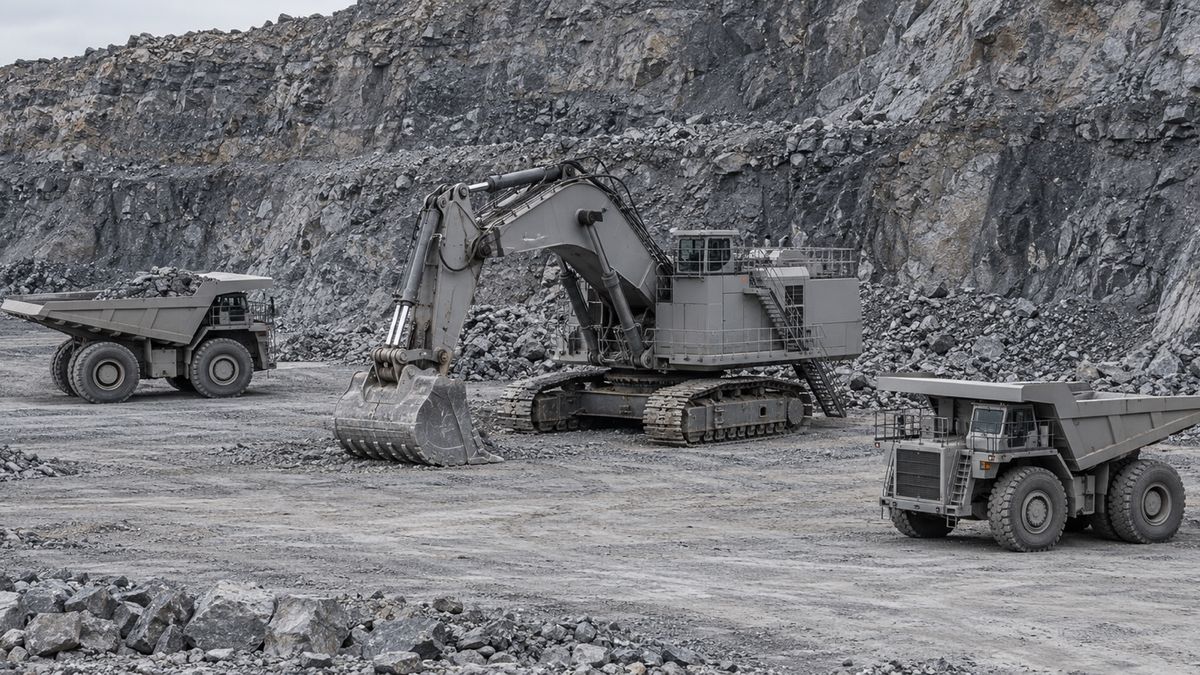
A single haul truck failure, often averaging around $25,000 per hour, quickly expands beyond the asset itself. Trucks begin to queue, loaders lose rhythm, and production flow becomes uneven.
This creates a compounding effect across the system.
In most operations, downtime costs fall in the range of $5,000 to $100,000 per hour, but the final impact depends on how deeply the disruption spreads through the mining cycle.
Unplanned events also carry an emergency multiplier.
Repairs performed under pressure typically cost 3 to 5 times more than planned maintenance, and in extreme cases, total impact can reach up to 15 times higher due to cascading delays, overtime, and loss of coordination.
Downtime is not a maintenance cost.It is a system-wide performance loss.
Downtime Cost Formula (What to Actually Measure)
To properly quantify downtime, production value must be included.
Core financial impact formula
L = (Uhr × Pi × Mu) × D
Where:
- Uhr = Units produced per hour
- Pi = Percentage of production impacted
- Mu = Margin per unit
- D = Duration of downtime
This formula shifts the focus from time loss to value loss, which is what actually matters.
Operational cost layer (practical view)
Downtime Cost per Hour =(Production Rate × Value per Tonne)
- Idle Fleet Cost
- Labor Cost
- Repair Cost
Example
A haul system producing 2,000 tonnes per hour at $40 per tonne generates $80,000 per hour in value.
Once idle trucks, fuel burn, and delay effects are included, the real cost exceeds this base figure.
This is why relying on simple hourly estimates often underreports actual loss.
After this stage, the real multiplier begins.
In most open-pit operations, downtime does not stay local.Queue formation, dispatch imbalance, and cycle disruption can amplify the total impact by 3 to 5 times beyond the initial failure.
Cascading Impact Across the Mining System
Downtime spreads through the system faster than most teams expect.
When one asset fails, the effect travels across the mining cycle.Trucks begin waiting, loading points slow down, and dump coordination breaks.
The system starts operating below its designed efficiency.
This is why adding more equipment rarely solves the problem.Without control over flow and coordination, inefficiencies simply shift location instead of disappearing.
For a deeper operational view, refer to Guaranteed Production Throughput
Key Metrics That Define Downtime Performance
Downtime cannot be reduced without measuring the right indicators.
MTBF (Mean Time Between Failures)
MTBF = Total Uptime / Number of Failures
For haul trucks, industry averages typically range between 60 to 80 hours, while best-in-class operations target 450 to 600 hours.
A low MTBF signals recurring failures and unstable operations.
MTTR (Mean Time to Repair)
MTTR = Total Repair Time / Number of Repairs
Reducing MTTR shortens recovery cycles and limits operational disruption.
Availability
Availability = MTBF / (MTBF + MTTR)
Even small improvements in availability can significantly increase annual output.
Unplanned Downtime Percentage
Unplanned Downtime % =(Downtime Hours / Total Operating Hours) × 100
High percentages indicate a reactive system rather than a controlled one.
For a broader operational perspective, exploremining fuel cost reduction strategies.
Reactive vs Predictive Maintenance Impact
Factor | Reactive Maintenance | Predictive Maintenance |
|---|---|---|
Downtime | High and unpredictable | Reduced and controlled |
Repair Cost | Emergency and expensive | Planned and optimized |
MTBF | Low | Higher |
MTTR | Longer | Shorter |
System Impact | Cascading disruptions | Stabilized operations |
Predictive approaches have consistently shown 35 to 50 percent reduction in unplanned downtime, along with better planning and improved reliability.
Why Unplanned Downtime Keeps Happening
Downtime is rarely caused by a single failure.It is usually the result of disconnected systems and delayed decision-making.
Most operations still rely on reactive maintenance, where issues are addressed only after failure occurs.Without real-time visibility into equipment condition, early warning signs are missed.
This leads to sudden breakdowns, unplanned stoppages, and costly emergency repairs.
When maintenance, dispatch, and operations work in isolation, downtime becomes inevitable.
For a broader operational perspective, explore Predictive Site Resilience
What This Means for Your Operation
Downtime is not just about equipment reliability.
It is about how the entire operation is coordinated.
If systems are disconnected, failures spread faster than teams can respond.
If systems are connected, failures are contained before they impact the operation.
The only way to reduce downtime consistently is to manage the operation as a connected system.
That is exactly what AIM is built for.
What to Do Next
Understand where downtime is actually costing you and how to reduce it in real time.
Get a clear breakdown of your downtime impact, root causes, and potential recovery across your operation with HonestDig mining optimization platform
Frequently Asked Questions
1. What is the average cost of downtime in mining?
A typical haul truck failure averages around $25,000 per hour, while total downtime costs can range between $5,000 to $100,000 per hour depending on operational impact.
2. How do you calculate downtime cost in mining?
Downtime cost is calculated using production loss, labor, repair costs, and system impact. A common formula is:L = (Units per hour × impact × margin) × downtime duration.
3. What is MTBF in mining?
MTBF (Mean Time Between Failures) measures how long equipment operates before failing. Higher MTBF indicates better reliability and fewer disruptions.
4. Why is unplanned downtime more expensive?
Unplanned downtime leads to emergency repairs, idle equipment, and cascading delays. These increase costs by 3 to 5 times, and sometimes up to 15 times.
5. How can mining operations reduce downtime?
By using predictive maintenance, real-time monitoring, and better coordination between teams. Early detection and planning are key to reducing failures.