AI Mining Software Business Case for ROI
Learn how to build a board-level business case for AI mining software using ROI, cost leakage, productivity gains, downtime reduction, ESG, and risk control.
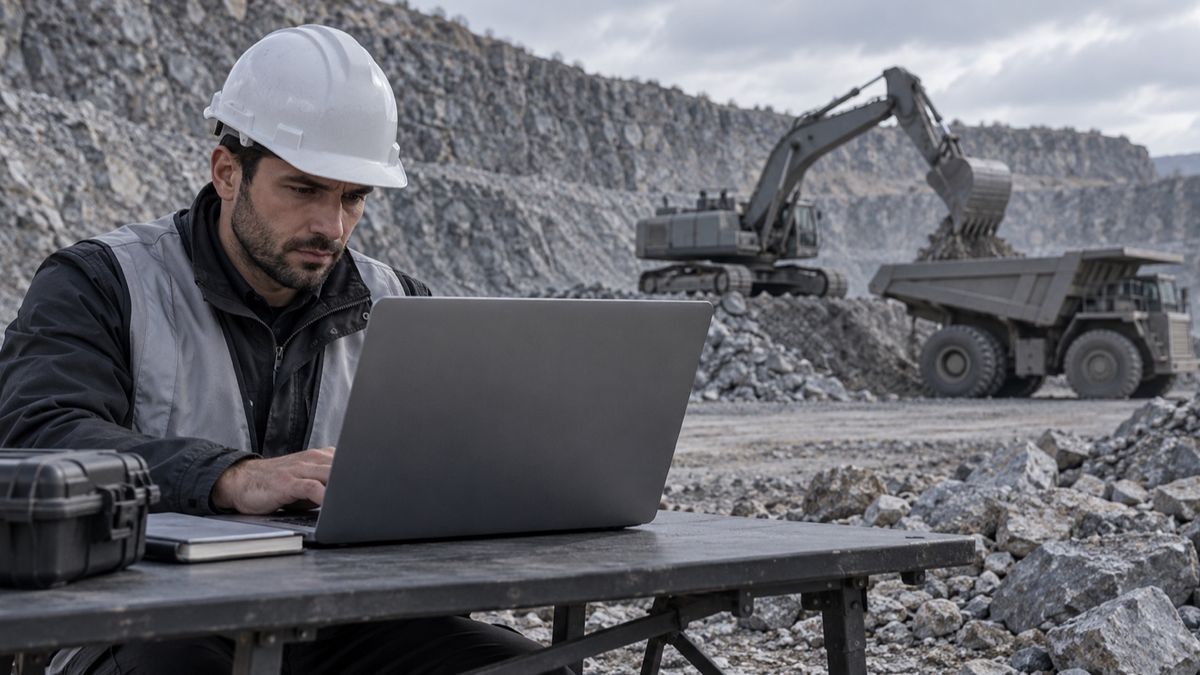
How to Build a Business Case for AI Mining Software: ROI, Cost Leakage, and Risk Reduction
AI mining software is not only a technology investment. It is an operational performance decision.
For boards and executive teams, the real question is not whether AI sounds useful. The question is whether it can recover measurable value from the mine.
That value usually comes from four areas:
- Lower operational leakage
- Higher productivity
- Reduced downtime
- Stronger risk control
A strong business case should not be built around generic automation claims. It should show how AI connects fleet, fuel, maintenance, workforce, safety, reporting, and site activity into one operating system.
This is where AIM by HonestDig fits. AIM is built as a mining operations intelligence platform that helps teams move from fragmented visibility to connected operational control.
Why AI Mining Software Needs a Board-Level Business Case
Mining operations already run on multiple systems. Fleet tools, ERP platforms, maintenance software, spreadsheets, fuel logs, safety systems, and reporting dashboards all play a role.
The problem is that these systems often work separately.
When dispatch, fuel, maintenance, workforce, and site activity are disconnected, losses spread quietly. Trucks wait. Fuel is wasted. Maintenance teams respond late. Supervisors work with incomplete information. Leaders see the impact after the shift instead of during the shift.
A board-level business case should make one point clear:
AI mining software is not another dashboard. It is a control layer that helps the mine act sooner.
Start With Operational Leakage
The strongest ROI case begins with operational leakage.
Operational leakage includes the losses that happen every shift but are often accepted as normal. Research across enterprise operations often places value leakage around 8% to 9% of contract value, while your supplied research frames operational leakage at 9% to 11% of total contract value annually. (Sirion)
In mining, this leakage can show up as:
- Haul truck idle time
- Long queues at loaders or dump points
- Unnecessary fuel burn
- Delayed dispatch decisions
- Poor route coordination
- Unplanned downtime
- Labor misalignment
- Manual reconciliation
- Late reporting
These losses are connected. Idle time affects fuel. Fuel affects cost per tonne. Downtime affects dispatch. Workforce gaps affect execution. Slow reporting affects decisions.
This is why AI mining software should be evaluated as an operations intelligence layer, not a point solution.
Connect AI Mining Software ROI to Throughput
Throughput is one of the clearest areas for board-level ROI.
The business case should explain how AI mining software improves output from existing assets by supporting better dispatch, cycle consistency, fleet utilization, maintenance readiness, and production response.
This is not only about moving more trucks.
It is about improving the operating decisions that determine production performance.
AIM’s Guaranteed Production Throughput connects fleet management, dispatch, fuel management, and inventory readiness so throughput is managed as a connected outcome.
Show the Cost of Fuel Waste
Fuel loss is not only a measurement problem. It is an operational control problem.
Fuel waste often comes from poor routing, excessive idling, delayed assignments, queue formation, unmanaged refueling windows, and equipment behavior.
A business case should show how AI mining software connects fuel use to the decisions that caused it.
That is how teams move from monthly fuel review to real-time fuel control.
For supporting context, read HonestDig’s blog on mining fuel cost reduction software.
Quantify Downtime and Risk Reduction
Downtime should not be presented only as a maintenance issue.
It is a site-wide risk.
When equipment health, parts readiness, dispatch planning, and production priorities are disconnected, one asset issue can create wider operational loss.
A business case should include:
- Lost production hours
- Idle fleet time caused by unavailable equipment
- Emergency repair cost
- Missed production targets
- Planning disruption
- Safety and escalation risk
AIM’s Predictive Site Resilience supports earlier response by connecting assets, alerts, workflows, and site activity into one operating view.
This helps mining teams act before one issue spreads across the operation.
Include Workforce, Safety, and ESG Impact
AI mining software should also be evaluated through workforce execution, safety, and ESG readiness.
A mine can have the right equipment available and still lose performance if the right workers, skills, certifications, safety controls, and task assignments are not aligned with the shift plan.
AIM’s Autonomous Workforce Governance connects workforce readiness, task allocation, safety, compliance, and shift execution with live operational needs.
ESG also belongs in the business case. Scope 3 emissions can represent around 90% of a company’s total emissions, which makes operational data, supplier visibility, fuel use, and value-chain reporting more important for board-level oversight. (McKinsey & Company)
For mining leaders, this means AI mining software should not only improve efficiency. It should help create cleaner, more auditable operational data for ESG, investor, and compliance discussions.
Build the ROI Model Around Measurable Metrics
A board-level business case needs numbers that leadership already understands.
Use metrics such as:
- Cost per tonne
- Tonnes moved per hour
- Haul truck idle time
- Fuel cost per tonne
- Equipment availability
- Unplanned downtime
- Maintenance response time
- Labor utilization
- Safety response time
- Production plan variance
- Reporting cycle time
The ROI model should compare the cost of the software with the value recovered from lower leakage, better productivity, lower risk, and faster decisions.
A simple structure is:
ROI = Value recovered from operational improvement minus total cost of ownership
The total cost should include implementation, training, integration, support, and ongoing usage. This makes the business case more credible for finance and board-level review.
Separate Hard ROI From Strategic ROI
Not every benefit appears in the same way on the balance sheet.
Hard ROI includes measurable savings such as lower fuel cost, reduced downtime, lower maintenance cost, fewer manual reconciliation hours, and better asset utilization.
Strategic ROI includes better decision speed, stronger risk visibility, safer execution, cleaner reporting, ESG readiness, and improved readiness for future automation.
Both matter.
For external context, Forrester’s Total Economic Impact study for Celonis Process Intelligence reported 383% ROI over three years with a 6-month payback period. This should not be treated as an AIM claim, but it does show how boards increasingly evaluate process intelligence platforms through measurable value recovery, not software features alone. (Celonis)
Add Governance and Guardrails to the Business Case
Boards are not only asking what AI can improve. They are also asking how AI will be controlled.
The business case should address:
- Who owns AI-driven decisions
- What data the system uses
- How recommendations are reviewed
- Which actions require human approval
- How exceptions are escalated
- How performance is audited
- How risk is controlled during phased deployment
This matters because AI in mining should not create uncontrolled automation. It should create structured operational control.
The safest approach is phased adoption. Start with visibility, leakage detection, and decision support. Then expand toward stronger automation once data quality, governance, and operating confidence are in place.
AI Mining Software Business Case Checklist
Before presenting the business case, mining teams should ask:
- Which operational losses are currently measured?
- Which losses are visible but not controlled?
- Where does manual reconciliation slow decisions?
- Which systems are disconnected?
- How much idle time, downtime, and fuel waste can be reduced?
- Which teams need the same operating view?
- Can ROI be tracked across fleet, fuel, maintenance, workforce, safety, ESG, and site performance?
- Can the software support phased deployment?
- What does success look like in the first 90 days, 6 months, and 12 months?
Why AI Mining Software Should Be Positioned as Operational Control
The strongest business case is not built on AI hype.
It is built on operational control.
AI mining software should help mines move from tracking activity to improving decisions. It should connect the signals that affect throughput, cost, uptime, workforce execution, ESG visibility, and risk.
AIM by HonestDig is built for that shift. It connects fleet, fuel, maintenance, workforce, safety, reporting, and site activity into one intelligence layer so mining teams can act before losses spread across the operation.
Get a clear breakdown of where operational leakage is affecting your mine and how AIM can help recover measurable performance.
Frequently Asked Questions
What is AI mining software?
AI mining software uses operational data to support better decisions across fleet, fuel, maintenance, workforce, safety, reporting, and site performance.
How do you build a business case for AI mining software?
Start by identifying operational leakage, then connect those losses to measurable metrics such as idle time, fuel cost, downtime, cost per tonne, asset availability, production variance, and reporting speed.
What ROI metrics matter for AI mining software?
Key ROI metrics include cost per tonne, tonnes moved per hour, fuel cost per tonne, equipment availability, unplanned downtime, labor utilization, production plan variance, and reporting cycle time.
Why is AI mining software different from traditional mining software?
Traditional tools often track or report activity. AI mining software should connect operating signals and help teams act before losses spread across the site.
How does AIM support an AI mining software business case?
AIM connects fleet, fuel, maintenance, workforce, safety, reporting, and site activity into one operations intelligence layer so mining teams can identify leakage, reduce risk, and improve performance.