Mining Fuel Cost Reduction Software for Fleet Efficiency
Reduce mining fuel costs by 10–25% using proven strategies, real-time software, and fleet optimization techniques.
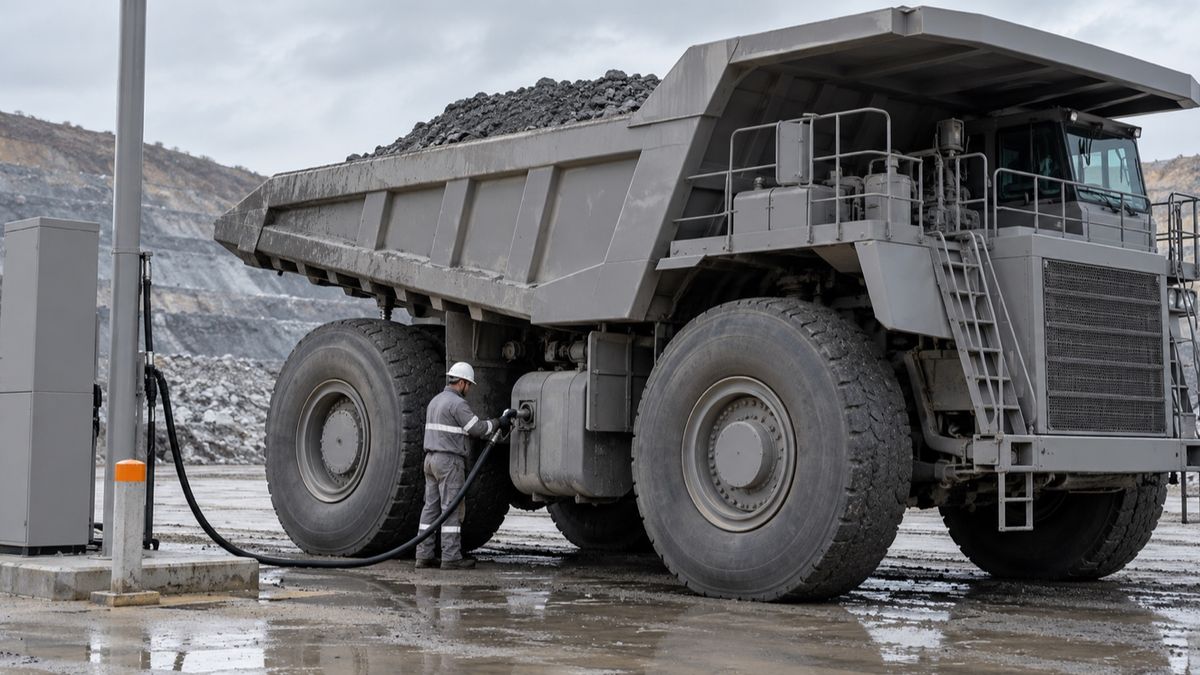
Mining Fleet Fuel Cost Reduction: 8 Proven Strategies That Actually Work
Fuel is up to 30% of your operating cost.
But here’s the real issue.
Most mines do not know where their fuel is actually being lost.Not precisely. Not in real time. Not at a decision level.
That’s why two sites with the same fleet, same routes, and same outputstill show a 15–20% difference in fuel burn.
This is not a measurement problem.It is an operational control problem.
AIM by HonestDig is designed to solve this exact gap by connecting fuel, fleet, and operational decisions into one system.
Why Mining Fuel Cost Reduction Software Is Critical Today
Fuel optimization breaks down when systems are disconnected.
Fleet systems optimize movement.Fuel systems track inventory.
Neither controls fuel loss.
This is where most mines struggle.
On many sites, 5–10% of fuel is lost before it even reaches the engine due to leakage, theft, or reconciliation gaps.
Fuel is measured after the loss happens.Not controlled while operations are running.
AIM changes this by unifying fuel inflow, storage, and real-time fleet activity into a single decision layer.
This is also where building predictive site resilience becomes critical, because fuel inefficiency is often a symptom of deeper operational gaps.
Where Fuel Burn in Mining Fleet Operations Actually Happens
Fuel loss is not a single event.It builds across the entire operating cycle.
It shows up when trucks sit idle during shift transitions, when haul roads increase rolling resistance, and when payload varies across trips. Each of these seems small in isolation.
The problem is repetition.
A small inefficiency, multiplied across thousands of cycles, creates a measurable increase in total fuel burn. Even a 1% increase in rolling resistance can increase fuel usage by 2–3% per cycle.
Fuel is not lost in tanks.It is lost in decisions.
Mining Fuel Optimization Strategies vs Reactive Operations
Operational State | What Happens on Site | Fuel Impact |
|---|---|---|
Reactive | Manual coordination, delayed visibility, inconsistent cycles | High fuel burn |
Controlled | Real-time decisions, structured operations, stable cycles | Reduced fuel waste |
8 Proven Mining Fuel Optimization Strategies That Work
These strategies are not theoretical.They are observed across high-performing operations.
1. Mining Fuel Cost Reduction Software for Real-Time Control
Most operations track fuel.Very few control it.
Mining fuel cost reduction software connects fuel inflow, storage, and consumption with fleet activity. This closes the reconciliation gap.
In advanced deployments, fuel variance (purchased vs consumed) drops from over 8–10% to less than 1%.
This is where platforms built on real-time operational intelligence in mining shift fuel management from reporting to control.
Typical outcome: 5–12% direct cost reduction
2. Reduce Fuel Consumption Haul Trucks by Eliminating Idle Time
Idle time is not an operator issue.It is a system flow issue.
Monitoring alone does not solve it.Coordinated dispatch does.
Real-time systems identify where queues form and correct them immediately.
Typical outcome: 3–8% reduction
3. Mining Fuel Optimization Strategies Through Haul Road Engineering
Fuel efficiency is directly tied to road quality.
Poorly maintained haul roads increase rolling resistance, forcing engines to operate under higher load.
The counterintuitive insight is this.
Small improvements in road condition often deliver more fuel savings than large equipment upgrades.
A well-maintained road can improve cycle efficiency by up to 10–15%.
4. Reduce Fuel Consumption Haul Trucks with Payload Consistency
Most sites focus on average payload. The real issue is payload variance.
When payload fluctuates:
- Underloading increases total trips
- Overloading increases fuel burn per cycle
Reducing variance, not just optimizing average load, can reduce total haulage fuel consumption by up to 30–35%.
Consistency is the actual lever.
5. AI Dispatch Systems to Reduce Fuel Burn Mining Fleet
Manual dispatch creates delays that are difficult to detect because they happen in small increments across the shift. Trucks wait longer than expected, routes are not optimized, and cycle times become inconsistent.
AI-based dispatch systems remove this variability by continuously adjusting flow based on real-time conditions. Instead of reacting to delays, the system prevents them from forming.
This is where traditional ERP systems fall short. They are not designed to operate at cycle-level speed, which is where fuel efficiency is actually determined.
This is exactly where ERP systems in mining fall short because they cannot operate at cycle-level speed.
In operations where dispatch is even partially automated, fuel consumption typically drops by 10–15%.
6. Operator Behavior as a Controlled Variable
Operator behavior is often treated as unpredictable, but it follows clear patterns when measured over time.
Differences in acceleration, braking, and gear usage can create up to 8–12% variation in fuel consumption across the same fleet. The issue is not lack of training. It is lack of continuous feedback.
When operators receive real-time performance visibility, behavior begins to standardize. This is where systems that automate workforce governance ensure consistency across shifts, not just individual performance improvements.
7. Predictive Maintenance to Reduce Fuel Burn Mining Fleet
Fuel inefficiency is often the earliest indicator of equipment underperformance.
Engines do not suddenly fail. They gradually move away from optimal efficiency due to issues like restricted airflow, incomplete combustion, or component wear. During this phase, fuel consumption increases before downtime occurs.
Predictive maintenance shifts the approach from reactive repair to early detection. By identifying inefficiencies before failure, operations improve both fuel efficiency and equipment reliability.
This is a key part of building predictive site resilience across the operation.
8. Long-Term Mining Fuel Optimization Through Energy Transition
Operational improvements deliver immediate savings.
Long-term reduction requires structural change.
Hybrid systems, LNG, and electrification reduce diesel dependency over time.
But these decisions depend on accurate operational data.
Without system-level visibility, even large investments fail to deliver expected returns.
Why Traditional Systems Fail to Reduce Fuel Costs
Most systems are built to report performance.
They are not built to control it.
They operate in silos.They show data after the shift ends.They delay decision-making.
Fuel is analyzed after it is lost.
That is the problem.
Disconnected systems create delayed decisions.Delayed decisions create repeated inefficiencies.
How Mining Fuel Cost Reduction Software Changes the Approach
Modern systems unify fuel, fleet, and operations into one decision layer.
This is where AIM changes the equation.
It enables:
- Real-time detection of fuel loss
- Immediate correction within the same shift
- Consistent execution across the entire operation
Fuel is no longer reviewed.It is controlled.
You don’t reduce fuel costs by tracking fuel.You reduce them by controlling operations.
What to Do Next
If fuel is still being reviewed at the end of the shift, the opportunity is already lost.
The next step is simple.
See where your fuel is actually being lost and how to fix it in real time.
Get a clear breakdown of your current fuel inefficiencies and potential savings with HonestDig mining optimization platform.