Mining Fleet Management Software vs Operations Intelligence
Learn the difference between mining fleet management software and mine operations intelligence, and why connected control matters for fleet, fuel, maintenance, workforce, and ROI.
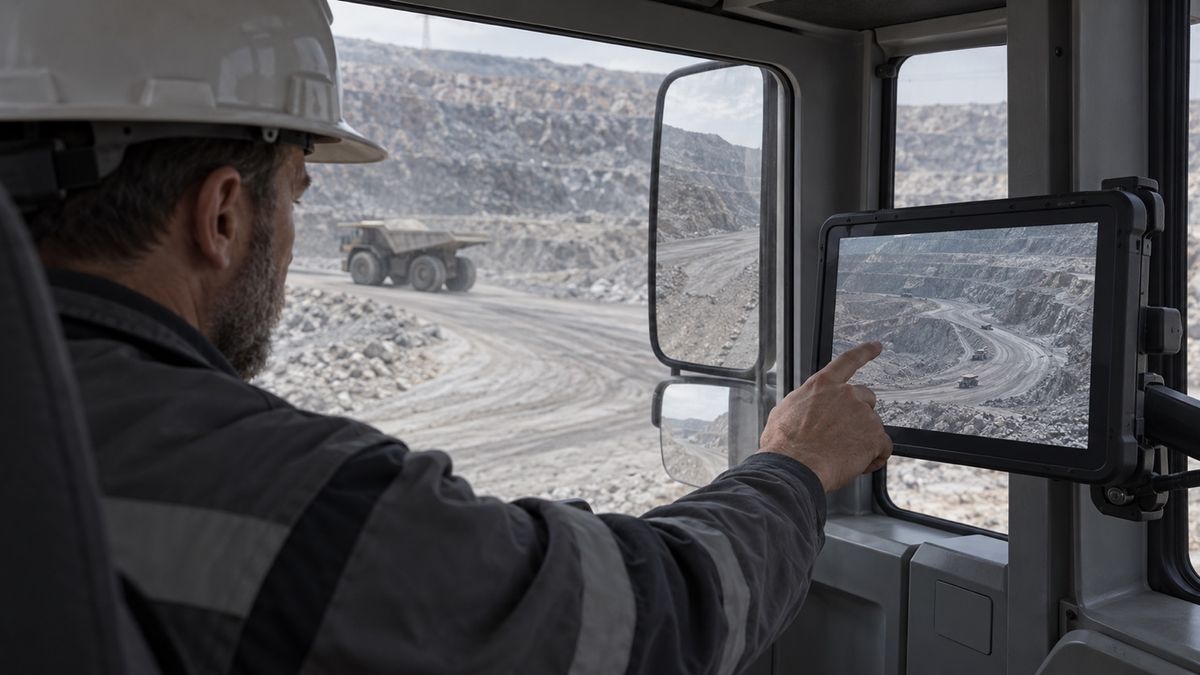
How Mine Operations Intelligence Changes Decision-Making
Mining fleet management software has been a critical part of mine operations for years. It helps teams track mobile equipment, assign trucks, monitor haulage cycles, manage dispatch activity, and report production performance.
That value remains important.
But modern mining performance is no longer limited by fleet visibility alone.
Mines lose productivity when fleet, fuel, maintenance, workforce, safety, inventory, and reporting operate as separate systems. A truck may be visible on a dashboard and still wait because the loader, route, refueling window, maintenance plan, or crew allocation is out of sync.
The issue is not only fleet tracking.
It is operational control.
This is where AIM by HonestDig goes beyond traditional fleet management software. AIM is built as a mine operations intelligence platform that connects assets, crews, fuel behavior, maintenance signals, workflows, safety events, and site activity into one control layer.
What Mining Fleet Management Software Does
Mining fleet management software is mainly built around the movement and performance of mobile assets.
It typically helps mines manage:
- Truck and shovel assignments
- Equipment location tracking
- Haul cycle monitoring
- Dispatch activity
- Production reporting
- Queue and idle time visibility
- Fleet utilization
- Material movement
These functions help teams understand how equipment is being used. They also support dispatchers and supervisors in reducing delays across loading and hauling.
However, fleet management software often focuses on what the fleet is doing. It may not fully explain why performance is being lost across the wider operation.
That is where the limitation begins.
Where Mine Fleet Management Software Falls Short
Fleet problems are rarely only fleet problems.
Idle time may appear as a truck utilization issue, but the cause may be loader delay, poor routing, fuel scheduling, maintenance readiness, workforce gaps, or weak coordination between teams.
Downtime may appear as an equipment issue, but the financial impact grows when maintenance, parts, dispatch, and production priorities are disconnected.
Fuel waste may appear as a consumption issue, but it is often caused by routing, queuing, idling, refueling windows, and cycle planning.
A fleet dashboard can show the symptom.
Modern mining teams need to understand the cause and act before the loss spreads.
That is why visibility alone is not enough.
What Mine Operations Intelligence Means
Mine operations intelligence connects the full operating environment, not only the fleet.
It brings together decisions across:
- Fleet and dispatch
- Fuel management
- Maintenance readiness
- Asset health
- Workforce deployment
- Safety alerts
- Inventory and parts availability
- Production performance
- Site-level reporting
The goal is not only to track what happened. The goal is to help teams control what is happening during the shift.
Fleet management answers:
Where are the trucks, and how are they performing?
Mine operations intelligence answers:
Why is performance being lost, what is causing it, and what should the team do now?
Mining Fleet Management Software vs Mine Operations Intelligence
Area | Mining Fleet Management Software | Mine Operations Intelligence |
|---|---|---|
Main Role | Tracks and manages fleet activity | Connects and controls site-wide operations |
Focus | Trucks, shovels, dispatch, and haul cycles | Fleet, fuel, maintenance, workforce, safety, and reporting |
Timing | Often visibility and report-led | Real-time decision support |
Problem Solving | Shows fleet performance | Shows why performance is being lost |
ROI Impact | Improves fleet visibility and utilization | Improves throughput, fuel control, uptime, response speed, and workforce execution |
From Fleet Tracking to Production Control
A fleet can appear active and still lose output.
Trucks may be moving, but cycle time may be slipping. Equipment may be available, but maintenance risk may be building. Fuel may be tracked, but waste may continue because operating decisions are not controlled in real time.
This is why Guaranteed Production Throughput connects fleet management, dispatch, fuel management, and inventory readiness. Throughput is not created by truck movement alone. It depends on the full system working together.
Mine operations intelligence helps teams move from tracking assets to controlling production performance.
Maintenance, Downtime, and Site Resilience
Downtime is not only a maintenance problem.
It becomes an operational control problem when asset health, service planning, parts readiness, dispatch, and production priorities are disconnected.
Traditional fleet software may show that equipment is unavailable. A stronger operations intelligence layer connects that signal to the next action.
Which truck assignments need to change?Which production target is at risk?Which part or service delay is creating the bottleneck?Which team needs to act first?
AIM’s Predictive Site Resilience supports this approach by connecting assets, alerts, workflows, and response paths into one operating view.
For supporting context, read HonestDig’s blog on reducing unplanned equipment downtime in mining.
Workforce Control as Part of Mining Operations Software
Fleet performance depends on people as much as machines.
A mine can have the right trucks available and still lose performance if the right workers, skills, certifications, and safety conditions are not aligned with the shift plan.
This is where Autonomous Workforce Governance becomes important. It connects workforce readiness, task allocation, safety, compliance, and shift execution with live operational needs.
Mine operations intelligence treats workforce execution as part of the operating system, not as a separate administrative function.
Why Mine Operations Intelligence Matters for ROI
The strongest ROI does not come from one feature. It comes from the system working together.
Better fleet control reduces idle time.Better dispatch improves haul cycle consistency.Better fuel visibility reduces waste.Better maintenance coordination protects asset availability.Better workforce governance improves shift execution.Better site resilience reduces disruption.
That is the difference between managing equipment and managing the operation.
For related context, read HonestDig’s blog on mining software ROI.
Why Modern Mines Need More Than Fleet Management Software
Mining fleet management software is still valuable. It helps mines understand fleet movement, asset activity, dispatch performance, and production flow.
But modern mines need more than visibility.
They need connected control.
AIM by HonestDig is built for that shift. It connects fleet, fuel, maintenance, workforce, safety, reporting, and site activity into one intelligence layer so mining teams can act before losses spread across the operation.
See where fleet delays, fuel loss, downtime, and workforce gaps are affecting your operation, and how AIM can help recover performance in real time.
Frequently Asked Questions
What is mining fleet management software?
Mining fleet management software helps mines track equipment, assign trucks, monitor haul cycles, manage dispatch activity, and report fleet performance.
What is mine operations intelligence?
Mine operations intelligence connects fleet, fuel, maintenance, workforce, safety, reporting, and site activity into one system so teams can manage performance in real time.
How is mine operations intelligence different from fleet tracking?
Fleet tracking shows where equipment is and how it is moving. Mine operations intelligence connects that activity with the causes of delay, cost leakage, downtime, and production risk.
Why is fleet management software not enough for modern mines?
Fleet management software is useful, but it may not fully connect fuel, maintenance, workforce, safety, and production decisions. Without that connection, mines can have visibility but still lack control.
How does AIM support mine operations intelligence?
AIM connects fleet, fuel, maintenance, workforce, safety, reporting, and site activity into one control layer so mining teams can act before losses spread across the operation.