Mining Haul Fleet Sizing: Match Factor Formula Guide
Learn mining haul fleet sizing using haul truck cycle time, shovel loading rate, availability, utilization, and the truck-shovel match factor.
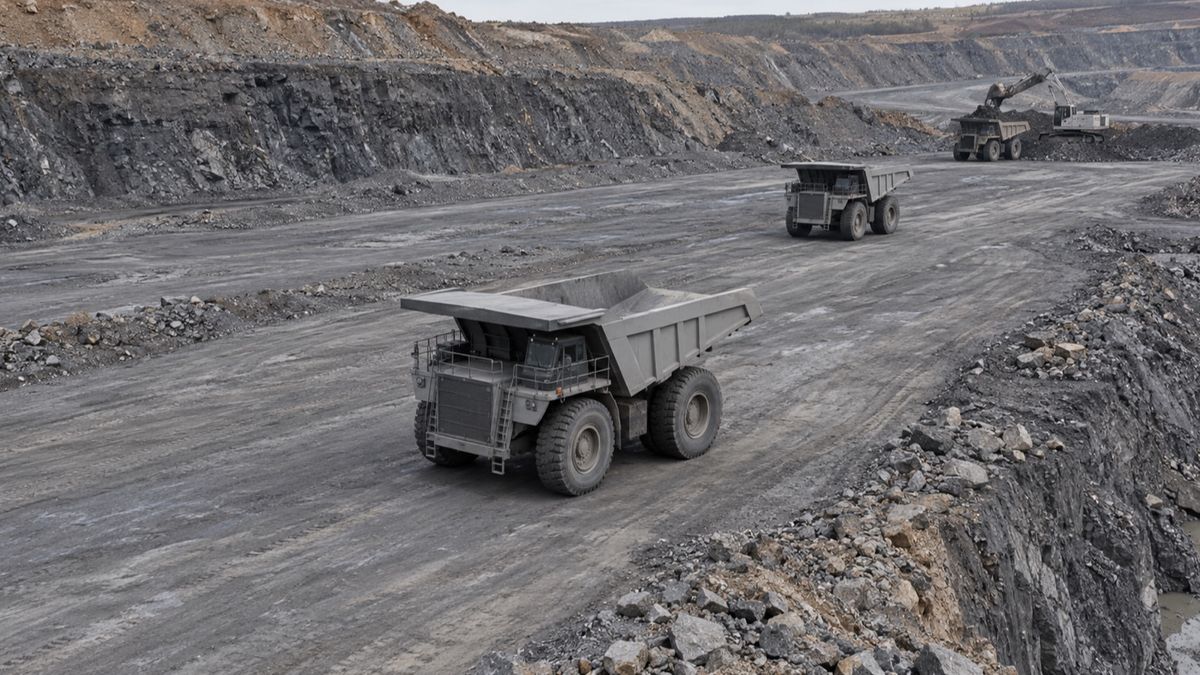
How to Size a Mining Haul Fleet: Truck-Shovel Match Factor and Fleet Sizing Formula
Adding another haul truck does not automatically increase production.
Once trucks arrive faster than the shovel can load them, the additional unit creates queues, idle time, fuel consumption, and operating cost without delivering an equivalent increase in tonnes moved.
Mining haul fleet sizing requires two connected calculations. The mining fleet sizing formula estimates the number of trucks needed to meet a production target. The truck-shovel match factor shows whether the loading unit can serve those trucks without excessive shovel waiting or truck queuing.
Match factor is the ratio between truck arrival capacity and shovel loading capacity within a haul circuit.
Start with Reliable Operating Data
Use actual dispatch, fleet management, or telemetry records rather than nameplate assumptions.
For each truck class and haul circuit, confirm:
- Target payload
- Loading time
- Loaded travel time
- Dumping time
- Empty return time
- Spotting time
- Equipment availability
- Operating utilization
- Route distance and grade
Keep the time basis consistent. If the truck production rate represents active operating time, availability and utilization must be applied when converting it into scheduled production.
How to Calculate Haul Truck Cycle Time
Break the complete cycle into measurable segments:
Truck cycle time = Spot at loader + Load + Loaded travel + Spot at dump + Dump + Empty return + Operational delays
Queue time should normally be kept separate when establishing the theoretical cycle time. Including an existing queue can distort the calculation and make an already over-trucked circuit appear to need additional trucks.
Observed cycle time can then be expressed as:
Observed cycle time = Theoretical cycle time + Queue time
This distinction matters because queue time is usually a symptom of fleet imbalance or congestion, not an unavoidable part of the haul route.
Use the haul truck cycle-time formula to determine whether lost time originates in loading, travel, spotting, dumping, or waiting.
Calculate Loading Time for Truck and Shovel Matching
Loading time measures how long a shovel or excavator requires to fill one truck.
Passes per truck = Truck target payload ÷ Average payload per bucket
Loading time = Passes per truck × Average bucket cycle time + Loading delays
The quality of truck and shovel matching depends on bucket capacity, bucket fill factor, material density, fragmentation, truck-body capacity, and loading geometry.
The theoretical shovel service rate is:
Shovel service rate = 60 ÷ Loading time in minutes
For example, a four-minute loading time produces a theoretical service rate of 15 trucks per hour before delays and availability losses.
Applying the Truck-Shovel Match Factor Formula for Fleet Optimization
For a homogeneous fleet:
MF = (Number of trucks × Loading time) ÷ (Number of shovels × Theoretical truck cycle time)
The result indicates the expected balance of the circuit:
- MF below 1.0: The fleet is under-trucked. The shovel may wait for trucks.
- MF equal to 1.0: Truck arrivals theoretically match shovel service capacity.
- MF above 1.0: The fleet is over-trucked. Trucks may queue at the loading unit.
Consider a circuit with one shovel, a four-minute loading time, and a 32-minute theoretical truck cycle.
Trucks | Loading Time | Cycle Time | Match Factor | Expected Condition |
|---|---|---|---|---|
7 | 4 minutes | 32 minutes | 0.875 | Some shovel waiting |
8 | 4 minutes | 32 minutes | 1.000 | Theoretical balance |
9 | 4 minutes | 32 minutes | 1.125 | Increased queue risk |
The theoretical balanced fleet size is:
Balanced trucks = Number of shovels × Cycle time ÷ Loading time
In this example:
Balanced trucks = 1 × 32 ÷ 4 = 8 trucks
This does not automatically mean eight trucks produce the lowest unit cost. Compare the rounded-down and rounded-up fleet sizes against production, fuel, operator, tire, and maintenance costs.
In plain terms, the eighth truck may increase production enough to justify its cost. The ninth may only increase queuing.
Calculate the Number of Haul Trucks Required
Production-based fleet sizing begins with the hourly output of one truck:
Truck production rate = Payload × 60 ÷ Cycle time
Apply availability and utilization consistently:
Effective truck production = Truck production rate × Availability × Utilization
The number of haul trucks required is:
Trucks required = Required production per hour ÷ Effective truck production
Round the result up, then compare it with the shovel service capacity.
When the production formula requires more trucks than the shovel can serve, the mine must improve cycle time, increase loading capacity, redesign the haul route, or reconsider the production target. Simply adding trucks will not resolve the constraint.
Size a Heterogeneous Truck Fleet Correctly
A heterogeneous truck fleet should not be reduced to one blended loading time or cycle time.
When multiple truck classes use the same loading unit:
MF total = Σ [(Trucks in class i × Loading time i) ÷ (Shovels × Cycle time i)]
Each truck class must retain its own payload, loading time, cycle time, availability, and utilization.
For fleets containing multiple truck and loader classes, discrete-event simulation or optimization modelling may be more reliable than a simple spreadsheet.
The practical message is clear: a fleet average can conceal the fact that one truck class is queuing while another is leaving the shovel under-supplied.
Use Live Conditions for Open-Pit Fleet Optimization
Fleet sizing provides a planning baseline, but operating conditions change throughout the shift.
Wet roads, longer dump routes, shovel delays, equipment failures, shift changes, and dump congestion can all alter the effective match factor.
Monitor:
- Shovel waiting time
- Truck queue time
- Cycle-time distribution
- Payload by truck class
- Fleet availability
- Planned-versus-actual production
The haul truck idle-time guide explains how queueing raises haulage cost. In multi-circuit operations, AI-driven mining dispatch can support open-pit fleet optimization by responding to changing conditions during the shift.
Move from Static Sizing to Live Fleet Balancing
A spreadsheet can calculate the planned fleet size, but it cannot automatically respond when cycle times, routes, or equipment availability change.
This is where an operational intelligence layer becomes valuable.
AIM by HonestDig connects live truck movement, equipment status, cycle time, and production priorities. It helps teams compare the planned match factor with actual shift conditions and identify when a circuit is becoming under-trucked or over-trucked.
This supports guaranteed production throughput without relying solely on static start-of-shift assumptions.
Frequently Asked Questions
What is the truck-shovel match factor?
The truck-shovel match factor compares truck arrival capacity with shovel service capacity. It identifies whether a haul circuit is under-trucked, theoretically balanced, or over-trucked.
What is the mining fleet sizing formula?
The mining fleet sizing formula divides the required hourly production by the effective hourly output of one truck after accounting for payload, cycle time, availability, and utilization.
How many haul trucks are required for one shovel?
The theoretical number equals shovel count multiplied by truck cycle time and divided by loading time. The result must also be tested against production targets and operating cost.
How is match factor calculated for a heterogeneous truck fleet?
Calculate each truck class using its own loading time and cycle time, then add the individual match-factor contributions when the truck classes use the same shovel.
Is a truck-shovel match factor of 1.0 always optimal?
No. A value of 1.0 represents theoretical service balance, but the lowest-cost fleet may sit below it when the cost of another truck exceeds the additional production gained.
Size the Fleet for the Circuit You Actually Operate
Correct mining haul fleet sizing starts with reliable cycle-time, loading, payload, availability, and utilization data.
Use the formulas to establish the baseline. Then validate the result against queues, shovel waiting, production performance, and unit cost under real operating conditions.
Move Beyond Static Spreadsheets
Haul conditions change throughout every shift. Your fleet-sizing decisions should change with them.
Request an AIM walkthrough to see how live dispatch and equipment data can turn theoretical match factors into active fleet-balancing decisions.