How Operational Efficiency Directly Impacts ESG Performance in Mining
Operational efficiency plays a direct role in improving ESG performance in mining by reducing emissions, improving safety, and strengthening governance through better visibility.
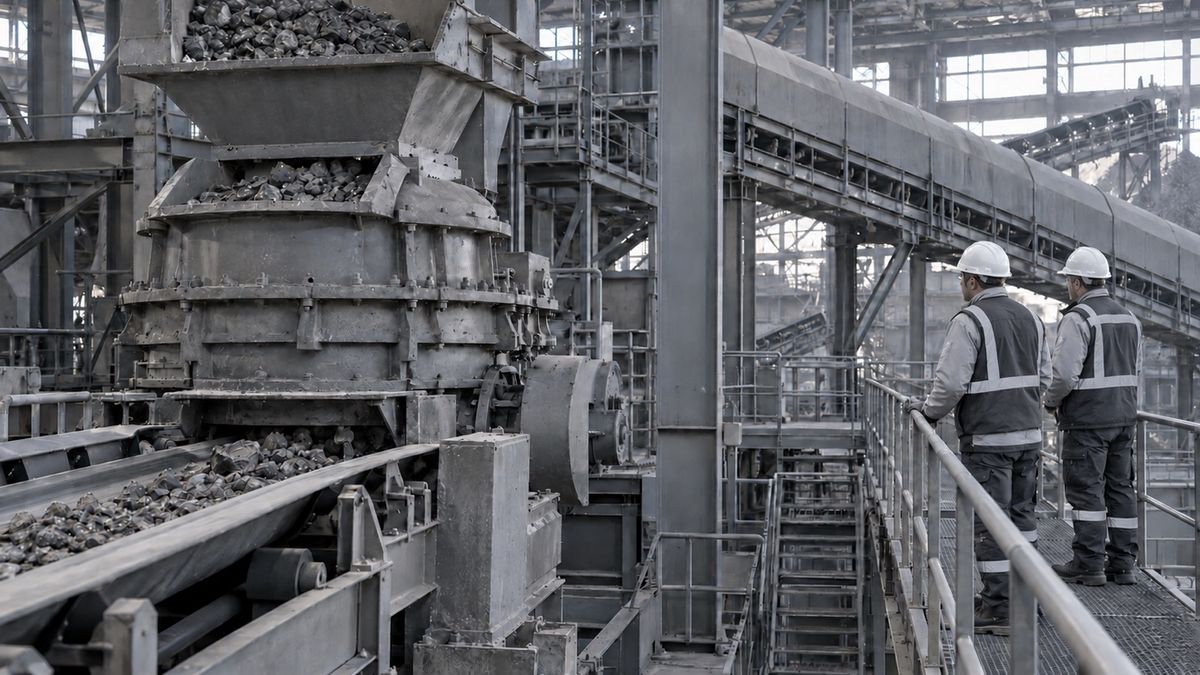
Why ESG Performance Is Built Inside Operations, Not Outside Them
Mining companies are under pressure to improve ESG performance while continuing to maintain output and control cost. These are often treated as competing priorities, but at site level they are closely linked.
Most ESG outcomes are not created in boardrooms or reports. They are shaped by how operations run every day.
When systems are inefficient, the impact is immediate. More fuel is burned than necessary, equipment runs below optimal performance, and teams operate reactively instead of predictably. These inefficiencies increase emissions, create safety exposure, and weaken control over decisions. McKinsey highlights that rising sustainability expectations and stagnant productivity have made operational excellence a core requirement for mining organizations rather than an optional improvement.
That is why ESG performance cannot be separated from operational efficiency. In many cases, it is a direct reflection of it.
Where Inefficiency Becomes an ESG Issue
At most mine sites, inefficiencies are not dramatic. They are small, repeated issues that compound over time.
A haul truck waiting longer than expected.A delay in dispatch decisions.A piece of equipment running in suboptimal condition.
Individually, these seem like minor operational gaps. Together, they increase fuel consumption, extend cycle times, and create unnecessary pressure on teams.
This is where the connection becomes clear. Poor efficiency is not just a cost issue. It directly contributes to higher emissions, more waste, and less predictable working conditions.
Bain’s research shows that when mining companies improve operational fundamentals, they often see gains of 15% to 30% in efficiency, along with improvements in safety and sustainability. The improvements do not come from ESG initiatives alone. They come from fixing how the operation runs.
Environmental Performance Improves When Waste Is Reduced at Source
Environmental targets are often framed around decarbonization, but at site level the starting point is much simpler.
Reduce waste in the system.
Haulage operations are one of the largest contributors to energy use in mining. When routing is inefficient or dispatch decisions are delayed, trucks spend more time idling and travelling unnecessary distances. This increases diesel consumption and emissions without adding any value to production.
Improving dispatch logic and coordination changes this. Systems that focus on AI-driven dispatch improving mining throughput reduce unnecessary movement and stabilize fleet performance. The result is not just higher throughput, but lower fuel burn per tonne moved.
Maintenance follows a similar pattern. Equipment that is poorly maintained consumes more energy and fails more unpredictably. Reactive maintenance leads to sudden breakdowns, emergency repairs, and inefficient resource use. Over time, this increases both operational cost and environmental impact.
That is why the discussion around the hidden costs of reactive maintenance in mining extends beyond cost. It reflects how instability in equipment performance directly affects emissions, energy use, and waste generation.
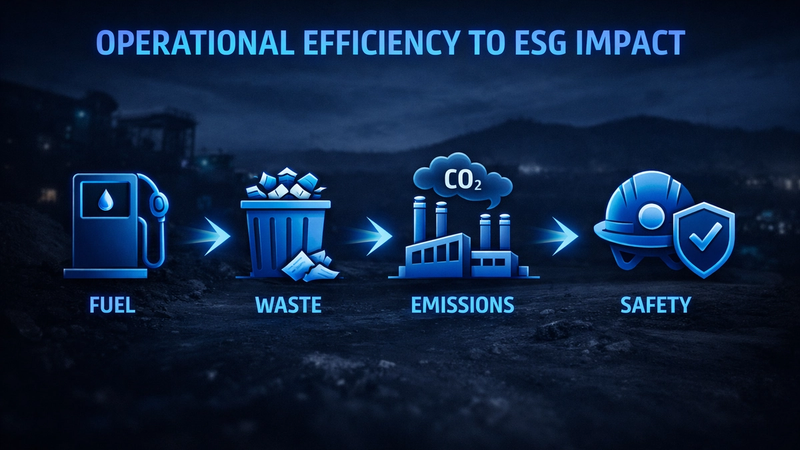
Safety Improves When Operations Become More Predictable
Operational State | What Happens on Site | Impact on Safety (ESG - Social) |
|---|---|---|
Inefficient / Reactive Operations | Maintenance becomes urgent instead of planned | Higher exposure to hazardous situations |
Teams work under pressure to recover delays | Increased likelihood of human error | |
Frequent unplanned events and disruptions | More unsafe conditions and variability | |
Limited visibility into real-time operations | Delayed decisions and poor coordination | |
Efficient / Predictable Operations | Maintenance is scheduled and controlled | Reduced emergency interventions |
Clear and stable workflows | Lower operational stress on teams | |
Better visibility across operations | Faster, more informed decisions | |
Consistent execution of tasks | Fewer high-risk situations overall |
Key Insight:Operational stability reduces risk before it appears. Efficient systems do not just respond better to problems, they prevent many of them from occurring in the first place.
Governance Becomes Practical When Visibility Improves
Governance in mining is often associated with compliance frameworks and reporting structures. But at an operational level, governance depends on how clearly teams can see what is happening.
Fragmented data creates fragmented decisions.
When information is spread across systems or delayed, teams rely on assumptions. This leads to inconsistent decisions, slower responses, and reduced accountability. McKinsey notes that increasing complexity and siloed communication can slow organizations down unless leaders actively improve how information flows across the business.
Operational efficiency improves governance by making the system more visible.
With real-time data and integrated systems, teams can align decisions across production, safety, and maintenance. This is where solutions focused on real-time operational intelligence in mining and predictive site resilience become essential.
They create a shared view of operations, making it easier to track performance, identify risks, and act with clarity.
Better governance is not created through more reporting. It is created through better visibility and faster, more informed decisions.
Why Efficiency and ESG Move Together
One of the biggest shifts in mining is the recognition that efficiency and ESG are not separate goals.
Operational improvements deliver both financial and ESG outcomes at the same time.
Reducing idle time lowers fuel costs and emissions.Improving maintenance reduces downtime and waste.Increasing visibility improves both decision-making and compliance.
This is why leading mining companies are focusing on operational excellence as the foundation for ESG performance. Bain emphasizes that technology alone is not enough. What matters more is focusing on the right value levers, building alignment across teams, and maintaining discipline in execution.
This is also where solutions such as guaranteed production throughput fit in. They are designed to improve how operations run, which in turn improves both performance and sustainability outcomes.
What This Means for Mining Leaders
Improving ESG performance does not always require new initiatives. In many cases, it requires a closer look at how operations are already running.
Questions that matter are often operational:
- Where is fuel being wasted?
- Where are delays increasing risk?
- Where is visibility limiting decisions?
These are not separate from ESG. They are the drivers of ESG.
Mining companies that improve operational efficiency tend to reduce emissions, improve safety, and strengthen governance at the same time. The connection is direct. Connect with AIM by HonestDig to discuss your operations.
Frequently Asked Questions
1. How does operational efficiency reduce emissions in mining?
By reducing idle time, optimizing routes, and improving equipment performance, operations consume less fuel and energy, which lowers emissions.
2. Why is maintenance linked to ESG performance?
Poor maintenance increases energy use, waste, and safety risk. Predictive maintenance improves efficiency and reduces environmental and operational impact.
3. Can ESG improve without operational changes?
Only at a reporting level. Real ESG improvement depends on how operations run on the ground.
4. How does efficiency improve worker safety?
More stable operations reduce emergency work, lower exposure to hazards, and improve working conditions.
5. What role does visibility play in governance?
Better visibility allows teams to make informed decisions, align faster, and improve accountability across operations.