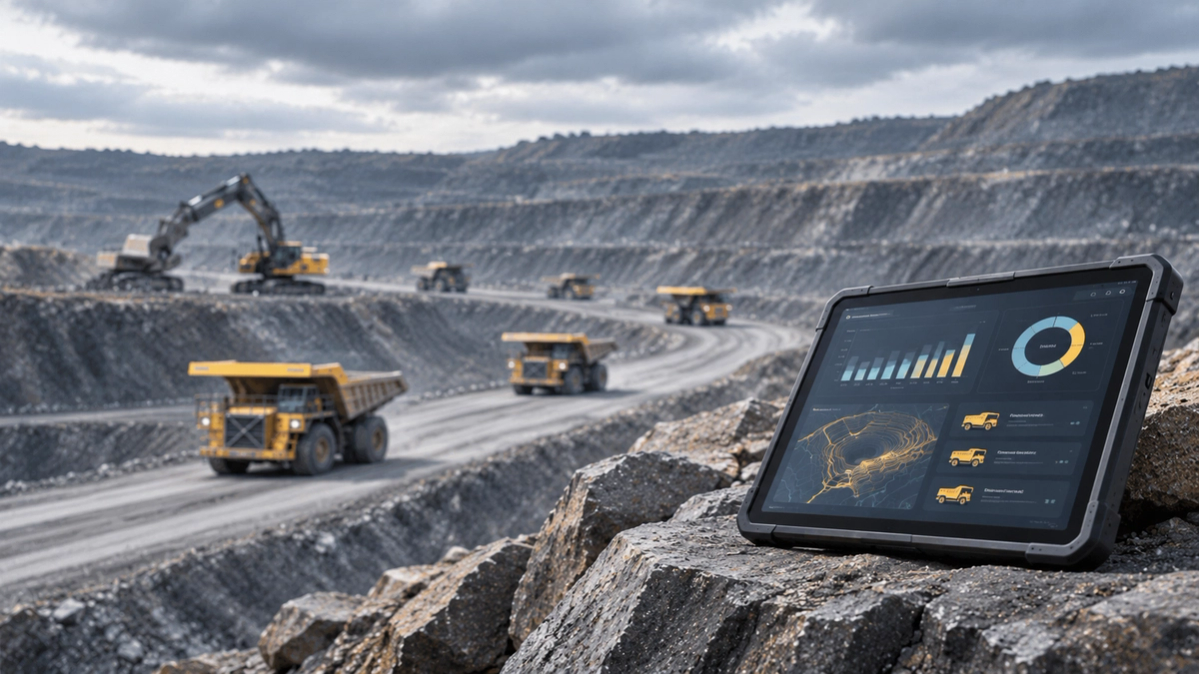
An underground mine loses a load-haul-dump (LHD) machine during a production shift. Trucks begin waiting, planned ore movement falls behind, and supervisors must reorganize equipment assignments.
The mine control system records the breakdown. But can it show the full production impact and help coordinate recovery?
This is the question mining companies should ask when evaluating Micromine Pitram alternatives.
Replacing an established control system is not always necessary. Some mines need better underground tracking or dispatch capabilities. Others need to connect existing production information with maintenance, workforce, and operational decisions.
Key Takeaway
Micromine Pitram is an established underground production control platform. Alternatives such as Hexagon UG Pro, Sandvik OptiMine, and Epiroc Mobilaris address different tracking, fleet coordination, and operational visibility requirements. ABB Ability OMS focuses on planning and execution. AIM by HonestDig represents a complementary operational intelligence approach rather than a verified like-for-like Pitram replacement.
What Does Micromine Pitram Offer?
Micromine Pitram provides production tracking, equipment monitoring, material movement recording, and dispatch capabilities.
A major strength is its time-stamped operational event model, which records equipment status, personnel allocations, locations, and production activity. Its dispatch system also considers site-defined priorities, travel times, and shift plans.
These capabilities make Pitram relevant to underground hard-rock mining, including operations requiring detailed production reconciliation.
Reasons to evaluate alternatives include positioning infrastructure, integration requirements, reporting flexibility, deployment complexity, or whether existing workflows meet the mine's needs.
These are evaluation considerations, not established shortcomings of Pitram.
Micromine Pitram Alternatives and Complementary Platforms
The following comparison uses publicly documented capabilities. HonestDig is the publisher of this article, and AIM is included as a complementary solution rather than ranked against direct competitors.
Platform | Core Capability | Positioning / Dispatch | Primary Consideration |
|---|---|---|---|
Hexagon UG Pro | Equipment tracking and shift workflows | Tracking and task coordination | Underground device and workflow deployment |
Sandvik OptiMine | Fleet visibility, task management and analytics | Location tracking; optimization tools | Module selection and connectivity |
Epiroc Mobilaris | Personnel and equipment visibility | Underground positioning and situational awareness | Positioning infrastructure |
ABB Ability OMS | Short interval control and scheduling | Operational coordination rather than dedicated RTLS | Planning and system integration |
AIM by HonestDig | Connected operations intelligence | Uses operational data; underground integration needs validation | Complements existing control systems |
These are capability comparisons, not independent performance rankings.
1. Hexagon UG Pro
Hexagon UG Pro combines industrial tablets, tracking nodes, and task communication to coordinate underground equipment and activities.
Hexagon describes support for short interval scheduling, workflow updates, and integration with external operational information. Its original deployment approach also supports storing and forwarding information where underground connectivity is limited.
Consider it when: Equipment coordination and shift execution are the main problems.
Limitation to assess: Device requirements and integration effort with existing mine systems.
2. Sandvik OptiMine
Sandvik OptiMine offers location tracking, equipment analytics, task management, and production visualization.
According to Sandvik, OptiMine supports both Sandvik and other manufacturers' equipment, with location-tracking units or tags depending on the application.
Consider it when: A mine needs underground fleet visibility alongside task and performance analytics.
Limitation to assess: Required modules, positioning coverage, and compatibility with existing infrastructure.
3. Epiroc Mobilaris Mining Intelligence
Mobilaris Mining Intelligence focuses on personnel and equipment positioning, 3D visualization, and operational awareness.
At Australia's Carrapateena mine, Mobilaris Situational Awareness and Onboard were deployed to improve understanding of underground movements and traffic flow.
Consider it when: Limited visibility into underground traffic and personnel locations creates operational or safety concerns.
Limitation to assess: Positioning coverage and the extent of production-control functionality required.
4. ABB Ability Operations Management System
ABB Ability Operations Management System focuses on coordinating production schedules and operational execution through short interval control.
Its planning-oriented approach suits operations that need to react to equipment disruptions and changing production priorities.
Consider it when: The main issue is maintaining alignment between the shift plan and actual execution.
Limitation to assess: Underground positioning and specialized dispatch may require additional systems.
5. AIM by HonestDig: Extending Mine Control Intelligence
AIM by HonestDig takes a different approach.
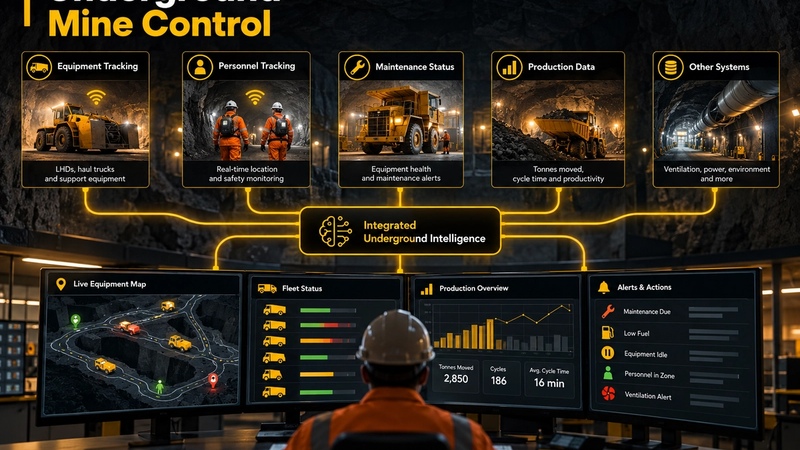
Its Guaranteed Production Throughput solution focuses on connecting fleet performance, maintenance readiness, dispatch information, and production priorities.
For a mine already using Pitram, this creates a potential complementary role: combining existing control information with other operational data to support coordinated decisions.
However, direct Pitram integration, underground positioning support, and deployment compatibility must be confirmed during technical evaluation. AIM should not be assumed to replace Pitram's underground event capture or dispatch functions.
Replace Pitram or Extend Your Existing System?
Consider an illustrative eight-hour shift where an LHD becomes unavailable for 90 minutes. At a planned loading rate of 120 tonnes per hour, that represents 180 tonnes of potential output affected before recovery actions.
Pitram records the equipment event. Maintenance systems hold repair information, while production planning tools identify remaining targets.
A connected operational view could bring these records together, helping supervisors evaluate alternative equipment, maintenance timing, and revised production priorities.
This matters whether the mine uses narrow-vein stoping, sublevel stoping, or block caving. Each has different equipment, movement, and scheduling constraints.
Replacing software introduces further considerations: historical data migration, operator retraining, integration testing, and parallel operation during commissioning.
If Pitram already captures reliable operational data, extending its value may be more practical than replacing it.
Explore underground connectivity and RTLS and real-time underground mining visibility.
Improve Underground Production Decisions With HonestDig
The right solution depends on the constraint you need to solve.
A tracking problem requires reliable underground positioning. A scheduling problem requires better execution control. Disconnected operational decisions require information to work together.
AIM by HonestDig focuses on the last challenge: bringing fleet, maintenance, workforce, and production information into a more connected decision-making process.
Schedule a Demo or Contact HonestDig to discuss your mine's operational requirements.
Frequently Asked Questions
What are the main Micromine Pitram alternatives?
Relevant platforms include Hexagon UG Pro, Sandvik OptiMine, Epiroc Mobilaris Mining Intelligence, and ABB Ability OMS. Their capabilities differ, so none should be assumed to replace every Pitram function.
Is Micromine Pitram suitable for underground mines?
Yes. Pitram supports underground production tracking, equipment monitoring, dispatch, material movements, and operational event recording.
Can AIM by HonestDig replace Pitram?
AIM is better evaluated as a complementary operational intelligence approach. Direct integration and replacement suitability require technical validation.
Which software is suitable for underground equipment tracking?
Hexagon UG Pro, Sandvik OptiMine, and Epiroc Mobilaris provide underground tracking-related capabilities, with different infrastructure and workflow requirements.
Should mines replace or integrate existing control software?
Replacement makes sense when essential capabilities are missing. Integration may be preferable when existing systems capture reliable information but operational coordination remains fragmented.