Real-Time Mine Control Center Software
Learn what modern mining teams should expect from real-time mine control center software, including assets, workforce, dispatch, alerts, safety, and reporting in one view.
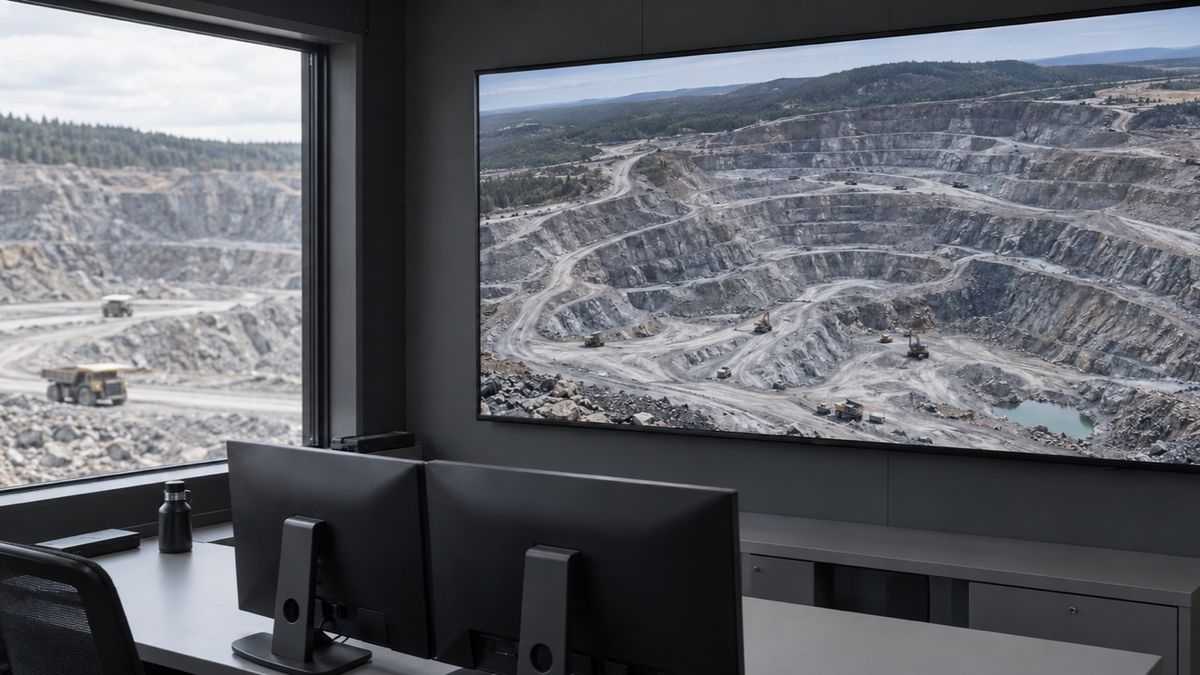
What Modern Mining Teams Should Expect
A real-time mine control center should do more than display dashboards.
Modern mining teams need one operating view that connects assets, workforce, dispatch, alerts, safety, maintenance, fuel, and reporting. Without that connection, teams may have visibility but still lack control.
A truck can be visible on a screen and still wait because the route, loader, fuel window, or maintenance signal is not aligned. A safety alert can appear in one system and still fail to influence dispatch. A production issue can be reported after the shift, but by then the loss has already happened.
The issue is not visibility alone.
It is operational control.
This is where AIM by HonestDig fits. AIM is built as a mining operations intelligence platform that connects fleet, workforce, maintenance, fuel, safety, reporting, and site activity into one real-time control layer.
Why Real-Time Visibility Is No Longer Enough
Many mines already have dashboards.
The problem is that dashboards often show what is happening without helping teams understand why it is happening or what action should follow.
A modern mine control center should help teams answer operational questions during the shift:
Which asset is creating production risk? Which trucks are waiting, and why? Which maintenance issue needs action before it spreads? Which worker, zone, or task needs attention? Which alert matters most right now? Which decision will protect throughput?
A real-time control center should move teams from passive monitoring to active decision-making.
For related context, read HonestDig’s blog on real-time operational intelligence in mining.
From Dashboards to a Single Mine Operating View
Modern control centers are moving toward a Single Pane of Glass model. This means the control room does not depend on separate screens for fleet, safety, maintenance, workforce, and production. Instead, it brings critical signals into one shared operating view.
The goal is not to replace every system. The goal is to normalize the right signals so teams can work from one version of operational truth.
This requires stronger IT, OT, and ET convergence. Information Technology connects business systems. Operational Technology connects equipment, sensors, and control systems. Engineering Technology connects mine plans, geology, and production design.
When these layers work together, a dispatch decision can account for route conditions, asset health, workforce readiness, ore movement, safety risk, and production targets.
That is what turns a control center from a room of screens into an operational nervous system.
What Modern Mine Control Center Software Should Include
Control Center Capability | What Mining Teams Should Expect |
|---|---|
Asset Visibility | Live status of trucks, loaders, drills, support equipment, and critical assets |
Dispatch Control | Real-time truck assignments, queue visibility, route decisions, and production priorities |
Workforce Visibility | Attendance, task allocation, certifications, location, and shift readiness |
Safety Alerts | Zone risks, SOS alerts, restricted access, unsafe movement, and escalation workflows |
Maintenance Context | Asset health, fault signals, downtime risk, work readiness, and response paths |
Fuel and Cost Visibility | Fuel behavior connected to idling, routing, cycle delays, and asset performance |
Reporting | Role-based reporting for supervisors, operations leaders, maintenance, safety, and executives |
The purpose is not to add another screen.
The purpose is to create one control view that supports faster action.
Unified Namespace and Real-Time Data Flow
Modern control centers increasingly depend on a Unified Namespace model.
In simple terms, every important asset, worker, sensor, task, and alert becomes a data source that can publish information into a shared operational layer. Authorized teams can then access the right information without waiting for manual integration or end-of-shift reconciliation.
This matters because a mine control center cannot work if data is trapped in vendor-specific tools, spreadsheets, or disconnected dashboards.
A control center should help teams connect the signal, understand the context, and trigger the response.
Dispatch, Assets, and Production Control
A mine control center should connect dispatch decisions with live production conditions.
Traditional dispatch may assign trucks based on availability or route logic. A stronger control center also accounts for loader performance, queue behavior, route changes, equipment health, fuel timing, and production targets.
This matters because throughput is not created by dispatch alone. It depends on the full operating system working together.
Research on stabilized and proactive control points to meaningful throughput gains, with advanced process optimization adding further performance improvements when systems are properly connected and adopted.
AIM’s Guaranteed Production Throughput connects fleet management, dispatch, fuel management, and inventory readiness so production performance is managed as a system-level outcome.
For deeper context, read HonestDig’s blog on AI-driven dispatch in mining.
Alerts Should Trigger Action, Not Noise
A control center can quickly become ineffective if every alert is treated the same.
Modern mining teams need alerts that are prioritized by operational impact. A fuel variance, route delay, maintenance fault, safety breach, or workforce gap should not only appear on a dashboard. It should connect to the right response workflow.
Alert Priority | Example | Expected Response |
|---|---|---|
P1 Critical | Fire, severe safety breach, Level 9 intervention | Immediate escalation and response workflow |
P2 High | Major asset down, primary crusher slowdown | Supervisor review and fast operational response |
P3 Medium | Sensor fault, minor maintenance risk | Planned response with operational context |
P4 Low | Reporting delay or non-critical issue | Standard workflow |
P5 Planning | Improvement request or scheduled change | Reviewed in planning cycle |
The question is not whether the system can send alerts.
The question is whether it helps the team act on the right alert at the right time.
Safety Expectations: From Alerts to Intervention
Modern safety expectations are moving beyond warnings.
EMESRT Level 9 safety refers to intervention controls, where the system can automatically reduce speed or stop equipment when a dangerous condition is detected. This matters because a control center should not only observe safety risk. It should support faster, more structured response.
A modern control center should connect safety alerts with dispatch, workforce visibility, restricted zones, escalation workflows, and operational decisions.
AIM’s Autonomous Workforce Governance connects workforce readiness, safety, compliance, and task execution with live site activity.
A modern control center should help teams protect both performance and people.
Maintenance and Downtime Need Control Center Context
Downtime is not just a maintenance issue. It becomes a site-wide performance issue when asset health, dispatch, workforce, parts readiness, and production priorities are disconnected.
A real-time mine control center should help teams see which asset is at risk, which production plan is affected, which dispatch decisions need to change, which part or technician is required, and which workflow should be triggered.
Predictive health monitoring and digital twin methods are increasingly used to identify asset risk earlier and reduce the impact of slow haul speeds, engine issues, and unplanned breakdowns.
AIM’s Predictive Site Resilience supports this by connecting assets, alerts, workflows, and site response into one operating view.
For supporting context, read HonestDig’s blog on reducing unplanned equipment downtime in mining.
Short Interval Control and Shift-Level Execution
A real-time mine control center should support short interval control.
This means teams should not wait until the end of a shift to understand whether the plan is drifting. They should compare plan versus actual performance during the shift and act before small deviations become missed daily targets.
The control center should help supervisors review production progress, asset status, workforce readiness, safety issues, and alerts in shorter operating windows.
This moves the control room from reporting to execution.
Reporting for Every Role
A real-time mine control center should not give every user the same dashboard.
Dispatchers need truck assignments, routes, queues, cycle delays, and priority changes. Maintenance teams need asset health, downtime risk, work readiness, parts, and response status. Safety teams need alerts, zone breaches, SOS events, personnel movement, and escalation. Operations leaders need throughput, plan variance, site constraints, and shift-level risk. Executives need cost, productivity, safety, fuel, uptime, and performance trends.
Good reporting should reduce confusion, not add another layer of manual interpretation.
Why Mining Operations Intelligence Matters in the Control Center
A real-time mine control center should not be a collection of dashboards.
It should be an operations intelligence layer.
Modern mines need fleet, fuel, maintenance, workforce, safety, dispatch, alerts, and reporting to work together. Without that connection, teams see activity but still react late.
AIM by HonestDig is built for this shift. It connects operational signals into one intelligence layer so mining teams can act before losses spread across the operation.
See how AIM gives mining teams one control view across assets, workforce, alerts, dispatch, safety, and reporting.
Frequently Asked Questions
What is a real-time mine control center?
A real-time mine control center is an operating environment that connects live data from assets, workforce, dispatch, safety, maintenance, alerts, and reporting so teams can manage site performance during the shift.
How is a mine control center different from a dashboard?
A dashboard shows information. A mine control center connects information with operational decisions, alerts, workflows, and response actions.
What should mine control center software include?
It should include asset visibility, dispatch control, workforce readiness, safety alerts, maintenance context, fuel visibility, short interval control, and role-based reporting.
What is a Single Pane of Glass in mining operations?
A Single Pane of Glass is one shared operating view that brings data from multiple systems into a single interface so teams can avoid tool-switching and respond faster.
How does AIM support real-time mine control centers?
AIM connects fleet, fuel, maintenance, workforce, safety, reporting, and site activity into one operations intelligence layer so mining teams can act before delays, risks, and losses spread.