AI Mining Dispatch vs Traditional Fleet Management
Compare AI mining dispatch with traditional fleet management and learn how connected dispatch improves idle time, fuel use, asset utilization, ROI, and throughput.
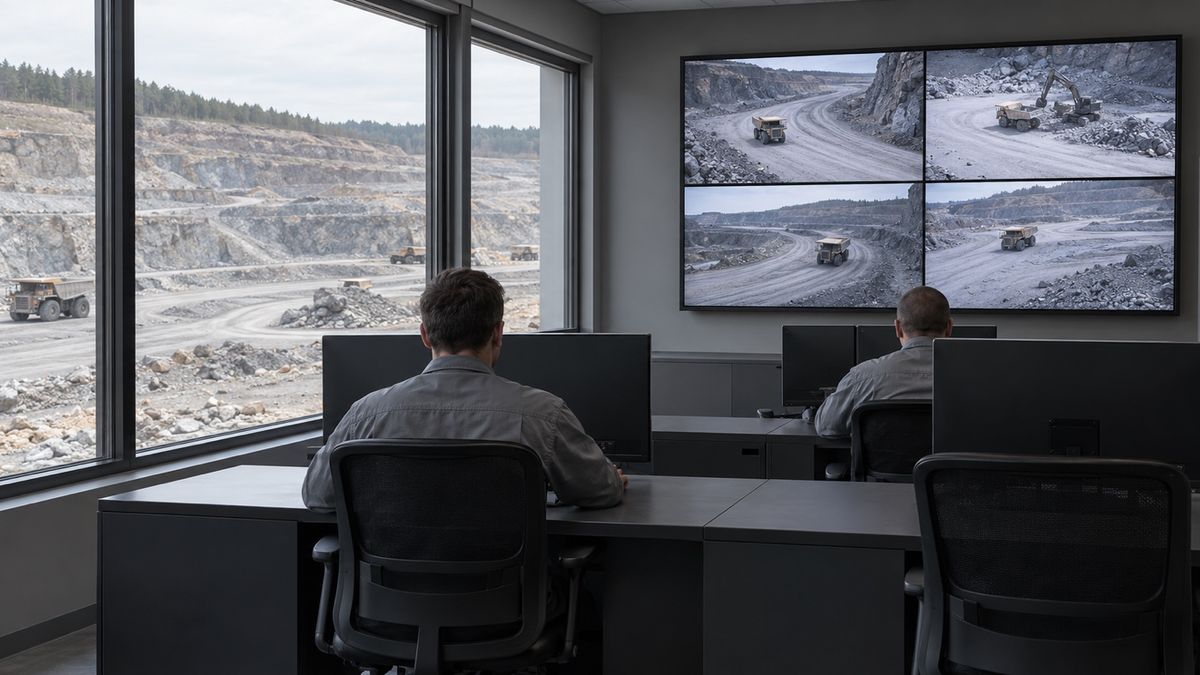
ROI and Throughput Comparison
Traditional fleet management systems have helped mines track equipment, assign trucks, monitor haulage activity, and report production performance for years. These systems still play an important role in mine operations.
But modern mining performance is no longer limited by tracking alone.
Mines lose throughput when dispatch, fuel, maintenance, workforce, routes, and site conditions are not connected in real time. Trucks wait because the system is out of sync. Fuel is wasted because dispatch decisions are disconnected from operating behavior. Asset utilization drops because maintenance signals are not tied to production priorities.
The issue is not fleet visibility alone.
It is operational control.
This is where AIM by HonestDig changes the role of dispatch. AIM is built as an operations intelligence platform that connects fleet, workforce, fuel, maintenance, safety, reporting, and site activity into one control layer. The goal is not only to move trucks faster. The goal is to improve the decisions that determine throughput, cost, and asset performance.
Traditional Fleet Management vs AI Mining Dispatch
Traditional fleet management usually focuses on equipment tracking, truck assignment, haulage activity, and post-shift reporting. These systems often depend on fixed rules, dispatcher judgment, and manual intervention when conditions change.
AI mining dispatch works differently.
It evaluates multiple operating signals together, including loader performance, queue formation, haul cycle status, route conditions, fuel behavior, equipment health, workforce readiness, and production priorities.
The difference is not automation alone.
The difference is coordinated decision-making across the operation.
Traditional systems help teams see activity. AI-led dispatch helps teams understand what is changing, why performance is being lost, and what action is needed during the shift.
How AI Dispatch Improves Haul Cycle Performance
Haul cycle delays rarely come from one issue.
A truck waits at the shovel. A loader falls behind. A route becomes congested. A refueling window interrupts flow. An equipment issue reduces available capacity. Each delay looks small in isolation, but together they reduce throughput.
Traditional fleet management may show the delay after it appears. AI dispatch should help identify where cycle time is slipping while the loss is still forming.
This matters because studies on AI-led dispatch and reinforcement learning continue to show measurable potential in open-pit mining. One 2026 study found that reinforcement learning increased material transported per hour by approximately 18% to 29% compared with a multi-agent baseline. (MDPI)
This connects directly with AIM’s Guaranteed Production Throughput, where fleet management, dispatch, fuel management, and inventory readiness work together to support more reliable output.
Reducing Haul Truck Idle Time With AI Dispatch
Idle time is not only a truck utilization problem.
It is a coordination problem.
Trucks do not wait because of operators alone. They wait because loaders, routes, dispatch priorities, fueling windows, maintenance readiness, and field conditions are not aligned.
Traditional fleet management can measure idle time. AI mining dispatch should help identify why idle time is happening and what decision can reduce it.
This is where Activity-Based Dispatch becomes important. Instead of only assigning trucks to loading and dumping points, the system supports the wider sequence of site activity. It connects movement, readiness, constraints, and response decisions so the mine can move closer to short interval control during the shift.
Research reported by Mining.com found that AI can reduce truck waiting times in open-pit mining by up to 55%, based on work by GEM Mining Consulting. (MINING.COM)
For more context, read HonestDig’s blog on how to reduce haul truck idle time.
Fuel Waste and AI Dispatch ROI
Fuel loss is not only a fuel tracking issue.
It is an operational control issue.
Poor routing, excessive queuing, unmanaged idling, delayed assignments, and poorly timed refueling decisions all increase fuel cost. Traditional fleet management may report fuel usage, but reporting does not prevent the loss.
AI dispatch should connect fuel consumption with route behavior, idle time, cycle delays, equipment performance, and production activity. This helps teams see where fuel is being lost and act before the loss becomes a monthly variance.
Fuel is not lost only in tanks. It is lost in decisions.
Research on haul truck fuel consumption has also identified empty idle time as a major contributor to unnecessary fuel use, with shovel queues being one of the causes of that idle time. (ScienceDirect)
This is why AI dispatch ROI should include fuel savings potential, not only production improvement. HonestDig’s blog on mining fuel cost reduction software explains this control gap in more detail.
Asset Utilization and Downtime Control
Better dispatch is not only about keeping trucks active.
It is about using assets in the right way.
A fleet can appear busy while still losing value through poor routing, avoidable queues, rushed maintenance, or weak coordination between production and asset health.
Traditional systems often separate dispatch from maintenance. AI-led dispatch should connect equipment condition, maintenance readiness, parts availability, and production priorities. This helps prevent one asset issue from spreading into idle trucks, missed cycles, and higher operating cost.
AIM’s Predictive Site Resilience supports this by connecting operational alerts, assets, workflows, and response paths into one operating view.
For supporting context, read HonestDig’s blog on reducing unplanned equipment downtime in mining.
AI Dispatch ROI Comparison for Mining Operations
The ROI difference comes from how each system supports decisions.
Traditional fleet management improves visibility and reporting. AI mining dispatch improves live coordination.
A practical ROI comparison should include:
- Lower haul truck idle time
- Better haul cycle consistency
- Lower avoidable fuel waste
- Higher asset utilization
- Faster response to disruption
- Better maintenance coordination
- Stronger production reliability
- Clearer leadership reporting
ROI does not come from one feature. It comes from the system working together.
Better dispatch reduces idle time. Lower idle time reduces fuel waste. Better maintenance timing protects asset availability. Stronger operational visibility improves response speed. Together, these improvements create a stronger business case.
HonestDig’s blog on mining software ROI explains how mining teams can turn operational gains into board-level value.
AI Mining Dispatch Evaluation Checklist
Before evaluating AI dispatch software, mining teams should ask:
- Does the system connect fleet, fuel, maintenance, workforce, and site activity?
- Can it identify why idle time or cycle delay is happening?
- Does it support real-time action, not only post-shift reporting?
- Can it improve fuel control through better operating decisions?
- Does it connect asset health with dispatch planning?
- Can it support Activity-Based Dispatch and short interval control?
- Does it track ROI across throughput, cost, downtime, and utilization?
- Can it integrate with current mine systems?
Why AI Mining Dispatch Matters for Throughput and ROI
Traditional fleet management remains useful, but modern mining teams need more than visibility.
They need connected operational control.
AI mining dispatch helps teams move from tracking trucks to improving the decisions that affect throughput, fuel, downtime, and asset performance.
AIM by HonestDig is built for that shift. It connects fleet, workforce, maintenance, fuel, safety, reporting, and site activity into one intelligence layer so mining teams can act before losses spread across the operation.
See where dispatch delays, idle time, and fuel loss are reducing your throughput, and how AIM can help recover performance in real time.
Frequently Asked Questions
What is AI mining dispatch?
AI mining dispatch uses operational data to support better dispatch decisions across trucks, loaders, routes, fuel behavior, equipment health, and production priorities.
How is AI dispatch different from traditional fleet management?
Traditional fleet management usually focuses on tracking, assignment, and reporting. AI dispatch focuses on connected decision-making across fleet, fuel, maintenance, workforce, and site activity.
How does AI dispatch reduce haul truck idle time?
AI dispatch helps identify where queues, route delays, loader constraints, or coordination gaps are causing trucks to wait, allowing teams to act sooner.
Can AI dispatch improve fuel efficiency?
Yes. When dispatch decisions are connected with route behavior, idling, refueling windows, and equipment performance, teams can reduce avoidable fuel waste.
How does AIM support AI mining dispatch?
AIM connects fleet, fuel, maintenance, workforce, safety, reporting, and site activity into one operations intelligence platform so dispatch decisions are made with wider operational context.