Unplanned Downtime Cost in Mining | Hour, Truck, Shift
Calculate what unplanned downtime costs a mine per hour, haul truck and shift using lost production, repair and operational impact.
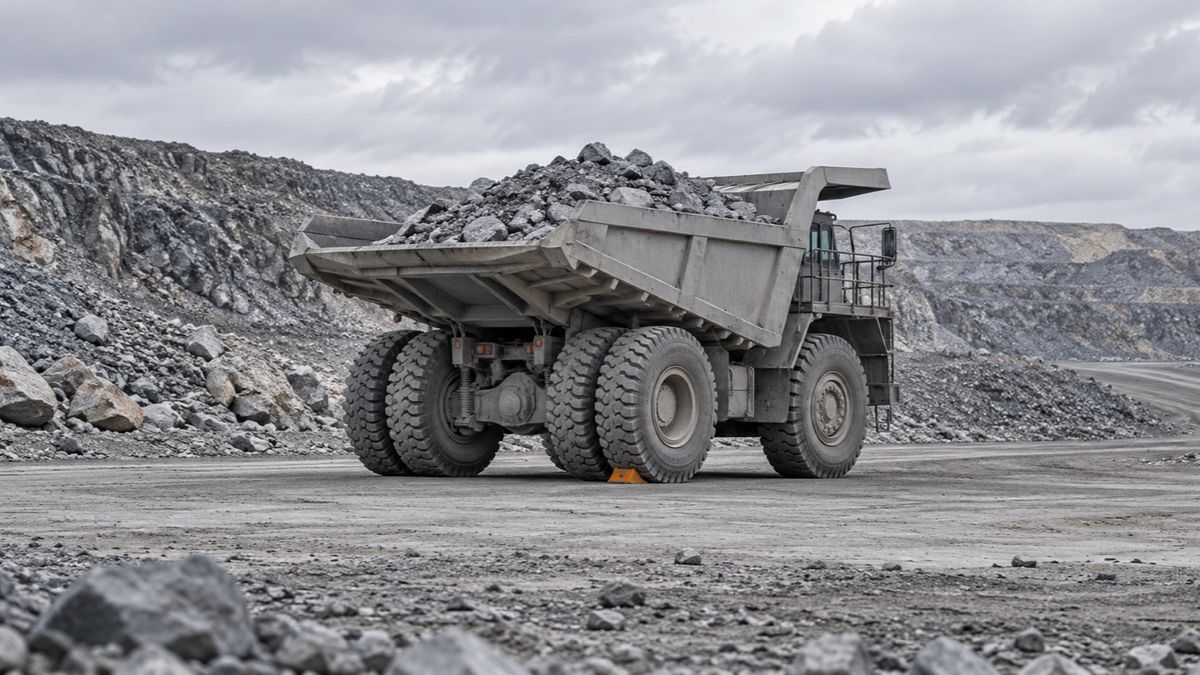
What Unplanned Downtime Costs a Mine Per Hour, Truck and Shift
Use a practical calculation to estimate how equipment breakdowns affect production, maintenance costs and shift performance.
One haul truck stops halfway through a production shift.
Maintenance sees a failed component. Dispatch sees one fewer truck. The loader operator sees longer gaps between trucks. The mine manager sees the impact later, when the shift closes below target.
The repair invoice captures only part of the loss.
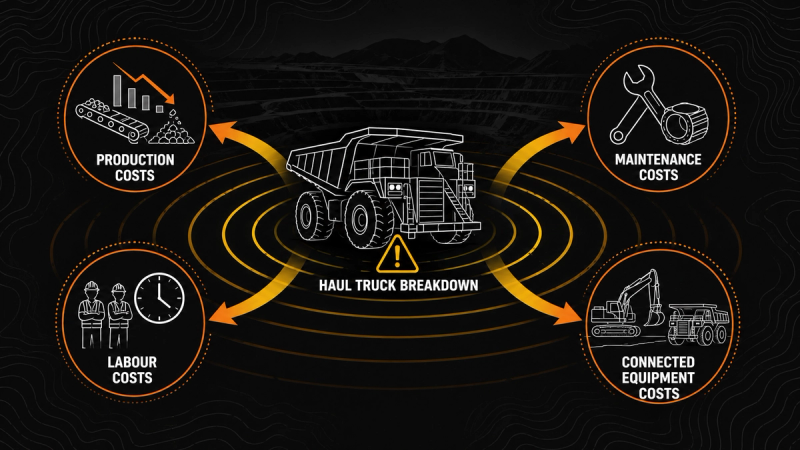
Unplanned downtime also reduces production, disrupts fleet balance, increases labour costs and creates pressure to recover tonnes later in the shift. Calculating the true cost requires the mine to connect all these effects.
Key Takeaway
The unplanned downtime cost in mining includes lost production, emergency repairs, idle labour and disruption to connected equipment. Mines should calculate the cost using site-specific tonnes per hour, contribution margin and repair expenses rather than relying on broad industry averages.
What Counts as Unplanned Downtime?
Unplanned downtime begins when equipment becomes unavailable unexpectedly and ends when it returns to productive operation.
For a haul truck, this can result from engine, tyre, electrical, braking, hydraulic or structural failures.
The impact can also spread beyond the failed asset. A shovel breakdown may leave several trucks waiting, while a conveyor failure can affect multiple upstream activities.
This is why one failed machine can disrupt an entire production system.
How Much Does Mining Downtime Cost?
The honest answer is that each mine must calculate it from its own production, recovery and repair data.
ABB’s 2025 industrial downtime research found that respondents placed hourly downtime costs anywhere from at least $10,000 to as much as $500,000, with downtime incidents potentially occurring every week. However, these are cross-industry estimates, not mining-specific benchmarks.
A support vehicle at a small mine and an ultra-class haul truck feeding a high-production operation create very different financial losses.
Cost area | What it includes |
|---|---|
Lost production | Tonnes not moved or processed |
Repair cost | Labour, parts, tools and contractor support |
Connected losses | Waiting loaders, trucks, operators or plant |
Recovery cost | Overtime, additional fuel or delayed maintenance |
Mining Downtime Cost Formula
Use this formula:
Downtime Cost per Hour = Lost Production Value + Repair Cost per Hour + Connected Equipment Loss + Recovery Cost
Calculate lost production using:
Lost Production Value = Tonnes Lost per Hour × Contribution Margin per Tonne
Use contribution margin instead of revenue. Revenue does not account for the cost of producing and processing the material.
Worked Haul Truck Downtime Example
Consider a haul truck with the following operating profile:
Input | Example |
|---|---|
Average payload | 200 tonnes |
Completed cycles per hour | 2 |
Production per hour | 400 tonnes |
Contribution margin | $3 per tonne |
Maintenance and response cost | $250 per hour |
Connected fleet disruption | $150 per hour |
These are illustrative figures. Contribution margins differ sharply by commodity, grade, strip ratio, processing route and market conditions. Use a figure approved by the mine’s finance team.
Cost Per Hour
Lost production value:
400 tonnes × $3 = $1,200 per hour
Add maintenance and connected fleet costs:
$1,200 + $250 + $150 = $1,600 per hour
The estimated haul truck downtime cost is $1,600 per hour.
Cost Per Breakdown
If the truck remains unavailable for four hours:
$1,600 × 4 hours = $6,400
The four-hour breakdown costs approximately $6,400, excluding any major replacement parts or long-term component damage.
Cost Per Shift
If the truck remains unavailable for an entire 12-hour shift:
$1,600 × 12 hours = $19,200
The estimated cost of losing one truck for the shift is $19,200.
If three similar trucks each lose four hours:
3 trucks × 4 hours × $1,600 = $19,200
Several shorter breakdowns can therefore produce the same shift-level loss as one truck remaining unavailable for the full shift.
Account for Recovered Production
Not every delayed tonne becomes a permanent production loss.
Dispatch may reassign equipment, another truck may increase utilisation or the mine may recover production later in the shift.
If the mine recovers 40% of the lost production in the example, only 60% should enter the final calculation:
$1,200 × 60% = $720 unrecovered production value
The adjusted cost becomes:
$720 + $250 + $150 = $1,120 per hour
This adjustment prevents the mine from overstating the financial impact.
Costs That Breakdown Reports Miss
Maintenance records usually capture labour and parts. They may not capture:
- Waiting loaders and operators
- Overtime used to recover production
- Additional fuel consumed during recovery
- Expedited parts and contractor charges
- Planned maintenance delayed to protect the shift target
In one documented case, Komatsu reported that early identification of failing head gaskets avoided approximately $250,000 in engine replacement and downtime costs.
That result belongs to one specific mine and failure. It should not be used as a general benchmark, but it shows why a developing fault can cost far more than the initial repair estimate.
The hidden costs of reactive maintenance should be included when reviewing repeated equipment failures.
Use Real Mine Data
A reliable calculation requires:
- Payload and cycles per hour
- Contribution margin per tonne
- Breakdown duration
- Labour, parts and contractor costs
- Connected equipment delays
- Percentage of production recovered
Useful mining equipment maintenance KPIs include availability, mean time between failures, mean time to repair and total unplanned downtime hours.
The mine should also use consistent asset states and delay codes. Poor classification can make an operating delay appear to be mechanical downtime or hide repeated failures under general categories.
Reduce the Cost Before the Failure Occurs
The goal is not to eliminate necessary maintenance stops. Planned maintenance protects the equipment and can prevent a longer, more expensive failure.
Mines should focus on detecting problems earlier, reducing repair time and coordinating maintenance with production priorities.
The guide to reducing unplanned equipment downtime explains how condition information, maintenance planning and operational visibility work together.
AIM by HonestDig connects equipment activity, production and operational information so teams can identify developing issues and understand the production impact of unavailable assets.
One Stopped Truck Can Affect the Whole Shift
The true cost of unplanned downtime is larger than the repair invoice.
A useful calculation connects the failed asset with lost tonnes, maintenance response and disruption across the fleet. Once the mine measures these costs consistently, it can prioritise the equipment problems with the greatest financial impact.
Frequently Asked Questions
How is mining downtime cost per hour calculated?
Add lost production value, repair expenses, connected equipment losses and recovery costs for each hour of downtime.
What is haul truck downtime cost?
It is the financial impact created when a haul truck cannot operate, including lost tonnes, repairs and disruption to loading and hauling.
Should lost production be valued using revenue?
No. Use contribution margin per tonne to avoid overstating the financial loss.
Does every breakdown result in permanently lost production?
No. Deduct any production recovered through dispatch changes, spare capacity or additional operating time.
What is the difference between planned and unplanned downtime?
Planned downtime is scheduled for maintenance or inspection. Unplanned downtime happens unexpectedly and usually causes greater operational disruption.
Which KPIs help reduce unplanned downtime?
Track equipment availability, mean time between failures, mean time to repair, downtime hours and repeat failures.